Have you ever put all your vegetables in the refrigerator as soon as you got home from the grocery store? I used to do that all the time. I thought keeping vegetables cold was always the best way to keep them fresh.
But after a while, I noticed something. Some of my cucumbers became soft and watery, while my garlic started to change color. That made me wonder if I was storing my vegetables the right way.
I started looking into how different vegetables should actually be stored, and I was surprised to learn that not every vegetable belongs in the refrigerator.
Some vegetables can maintain their flavor and texture better when stored in a cool, dry place instead.
If you’re like me and usually put most of your vegetables in the refrigerator, here are eight vegetables you may want to store differently.
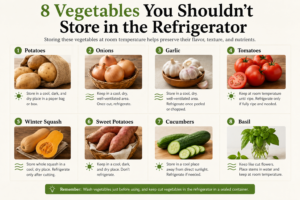
1. Potatoes
Potatoes are generally best stored in a cool, dark, and dry place rather than in the refrigerator.
Cold temperatures can cause changes in the way potatoes cook and taste. Refrigeration can also increase the conversion of starch into sugars.
Instead, keep potatoes in a paper bag, cardboard box, or another breathable container that allows some air circulation.
Avoid storing them in direct sunlight because light can cause potatoes to turn green and develop an undesirable bitter taste.
Storage tip: Keep potatoes in a cool, dark area and store them away from onions.
2. Onions
Whole onions generally do not need to be refrigerated.
They do best in a cool, dry, and well-ventilated place. Too much moisture can cause onions to become soft or moldy.
A mesh bag, basket, or another container that allows airflow can work well.
I prefer to keep whole onions somewhere with good ventilation rather than putting them in the refrigerator.
Once an onion has been cut, however, refrigerate the unused portion in a clean, covered container.
Storage tip: Keep whole onions away from excess moisture and avoid storing them directly next to potatoes.
3. Garlic
Whole garlic bulbs are another vegetable that usually does better outside the refrigerator.
Store garlic in a cool, dry, well-ventilated area. A damp environment can encourage mold and sprouting.
A mesh bag or breathable container is a good option because garlic needs airflow.
Once garlic has been peeled or chopped, refrigeration is a better choice. Keep prepared garlic in a clean, covered container and use it promptly.
Storage tip: Avoid keeping whole garlic in a sealed plastic bag where moisture can build up.
4. Tomatoes
Tomatoes are one of the vegetables that many people automatically put in the refrigerator.
However, whole ripe tomatoes are often better kept at room temperature when your kitchen is reasonably cool.
Cold temperatures can affect the texture and flavor of tomatoes, making them less juicy and aromatic.
Keep tomatoes away from direct sunlight and use them when they are ripe.
If tomatoes are already very ripe and you need to slow down spoilage, refrigeration can be useful. Allow refrigerated tomatoes to come closer to room temperature before eating if you want better flavor.
Storage tip: Store tomatoes with the stem side up and avoid stacking them too heavily, which can cause bruising.
5. Winter Squash
Whole winter squash, such as butternut squash and acorn squash, can usually be stored outside the refrigerator.
A cool, dry place with good air circulation is generally suitable for whole winter squash.
Avoid damp areas because excess moisture can encourage spoilage.
Once you cut the squash, refrigerate the unused portion in a clean, covered container.
Storage tip: Check whole squash occasionally for soft spots or signs of spoilage.
6. Sweet Potatoes
Sweet potatoes generally do better in a cool, dark, and dry place rather than in the refrigerator.
Cold temperatures can affect their texture and may cause them to cook differently.
Store sweet potatoes somewhere with good airflow and keep them away from excess moisture.
I also try not to wash sweet potatoes until I am ready to use them. Washing them before storage can add moisture and may shorten their storage life.
Simple tip: Keep sweet potatoes away from direct sunlight and avoid storing them in an airtight plastic bag.
7. Cucumbers
Cucumbers can be sensitive to very cold temperatures.
If you have ever taken a cucumber out of the refrigerator and noticed that it became soft or watery, temperature may be part of the reason.
For short-term storage, cucumbers can be kept in a cool area away from direct sunlight. However, if your home is warm, refrigeration may still be useful for maintaining quality.
The key is to avoid unnecessarily cold storage for long periods.
If you cut a cucumber, refrigerate the unused portion in a clean, covered container and use it promptly.
Storage tip: Keep cucumbers away from excess moisture and avoid leaving cut cucumbers at room temperature for extended periods.
8. Basil
Fresh basil is different from many other vegetables and herbs because it does not tolerate very cold temperatures well.
Refrigerating basil can cause the leaves to darken and lose their fresh appearance.
Instead, you can treat fresh basil somewhat like flowers.
Trim the stems and place them in a small glass or jar of water. Keep the basil at room temperature and loosely cover the leaves if needed.
Change the water regularly and use the basil while it is fresh.
Simple tip: Keep basil away from direct sunlight and very cold areas.
Why Some Vegetables Should Not Be Refrigerated
It may seem logical that colder temperatures always keep vegetables fresh longer, but different vegetables respond differently to temperature and humidity.
Some vegetables are sensitive to cold and may develop changes in texture, flavor, color, or appearance when stored in the refrigerator.
Others need refrigeration once they have been cut because food safety becomes more important after the protective outer surface has been damaged.
That is why there is no single storage rule that works for every vegetable.
The best storage method depends on the type of vegetable, whether it is whole or cut, how ripe it is, and the temperature and humidity of your kitchen.
What About Cut Vegetables?
This is an important part of vegetable storage.
Even when a whole vegetable is better stored outside the refrigerator, that does not mean a cut vegetable should be left on the counter.
Once a vegetable is cut, its exposed surface can become more vulnerable to contamination and quality loss.
For example, cut onions, tomatoes, cucumbers, squash, and other prepared vegetables should generally be refrigerated in a clean, covered container.
Whole and cut vegetables do not always have the same storage requirements.
When in doubt, refrigeration is generally the safer choice for cut or prepared vegetables.
Should You Wash Vegetables Before Storing Them?
Washing vegetables before storage may seem convenient, but extra moisture can sometimes encourage spoilage.
For many vegetables, it is better to wash them shortly before you are ready to eat or prepare them.
If you do wash vegetables before storing them, make sure they are dried thoroughly before putting them away.
This is especially important for vegetables that are sensitive to excess moisture.
How to Keep Vegetables Fresh Longer
Eating more vegetables is easier when you know how to store them properly. For example, broccoli has its own storage considerations.
- Store vegetables according to their individual needs rather than putting everything in the refrigerator.
- Keep vegetables away from excess moisture.
- Provide good airflow when appropriate.
- Keep potatoes and onions separated.
- Avoid direct sunlight for potatoes and other vegetables that can be damaged by light.
- Refrigerate cut, peeled, or prepared vegetables.
- Use clean, covered containers for cut vegetables.
- Check vegetables regularly for mold, soft spots, or other signs of spoilage.
- Avoid washing vegetables too far in advance unless you can dry them thoroughly.
- Use older vegetables first so they do not get forgotten.
Small changes in storage can make it easier to enjoy vegetables while reducing unnecessary food waste.
A Simple Way to Organize Your Vegetables
When I bring vegetables home from the grocery store, I try not to put everything into the refrigerator automatically.
Instead, I ask three simple questions:
1. Is it a whole vegetable?
Whole potatoes, onions, garlic, winter squash, and sweet potatoes often have different storage needs than cut vegetables.
2. Is it sensitive to cold?
Tomatoes, basil, and cucumbers can be affected by very cold temperatures.
3. Has it already been cut or prepared?
Cut vegetables generally need more careful storage and should be refrigerated promptly.
This simple check helps me decide where each vegetable belongs.
My Experience With Vegetable Storage
I used to think that vegetables that grow underground, such as potatoes and sweet potatoes, were the main foods that should stay out of the refrigerator.
But I always kept tomatoes, garlic, and cucumbers in the fridge.
Over time, I noticed that some of my tomatoes became wrinkled and dry, while the garlic and cucumbers sometimes became soft or started to change color.
That made me pay more attention to how I store them.
Now, instead of automatically putting every vegetable in the refrigerator, I try to check its storage needs first.
I have found that a few simple changes can make a noticeable difference in how vegetables look and taste.
Final Thoughts
The refrigerator is one of the most useful tools for keeping food fresh, but not every vegetable needs to be refrigerated.
Potatoes, onions, garlic, tomatoes, winter squash, sweet potatoes, cucumbers, and basil can have different storage needs.
The right method can depend on whether the vegetable is whole or cut, ripe or unripe, and how warm or humid your kitchen is.
Instead of putting every vegetable in the refrigerator automatically, take a moment to check how it is best stored.
A few simple changes can help preserve freshness, flavor, and texture while reducing unnecessary food waste.
Have you been storing any of these vegetables in your refrigerator?
Food Safety Note: Storage recommendations can vary depending on temperature, humidity, and the condition of the produce. When in doubt, follow food-safety guidance and discard produce that shows clear signs of spoilage.