Benefit of walking after a meal
Taking a 20-minute walk after a meal is one of the simplest ways to add more physical activity to your daily routine. You do not need a gym, special equipment, or an intense workout. A comfortable walk around your neighborhood, inside your home, or at a nearby park can be enough to get your body moving after eating.
Research suggests that physical activity performed after meals can help reduce the rise in blood glucose that normally occurs after eating. A systematic review and meta-analysis found that exercise after a meal had a greater short-term effect on post-meal glucose than exercising before eating or remaining inactive.
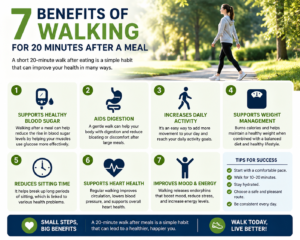
1. May Support Healthy Blood Sugar Levels
One of the potential benefits of walking after a meal is supporting healthy blood sugar levels. After eatingm glucose from food enters the bloodstream. Light physical activity, such as walking, allows your muscles to use some of that glucose for energy.
Agentle 20-minute walk after a meal may therefore be a useful part of a healthy lifestyle, especially when combined with balanced meals and regular exercise.
2.May Support Digestion
A short walk after eating may help your body feel more comfortable after a ameal. Gentle movement can encourage normal digestive activity and may be preferable to immediately sitting or lying down.
You do not need to walk quickly. A comfortable pace for 20 minute can be enough to add movement to your routine without making you feel overly tired.
3. May Support Heart Health
Regular walking is an accessible form of aerobic physical activity. When walking becomes part of your daily routine, it can contribute to overall cardiovascular fitness.
A 20-minute walk after a ameal can be an easy opportunity to accumulate physical activity throughout the day. Over time, consistent movement may support a healthier heart and cardiovascular system.
4. Can Help Increase Daily Physical Activity
Many people struggle to find a long period of time for exercise. Breaking movement into smaller sessions can make staying active feel more manageable.
For example, walking for 20 minutes after lunch and dinner provides 40 minutes of additional movement without requiring a separate long workout. Even when you are busy, a short walk can be easier to maintain consistently.
5. May Help With Healthy Weight Management
Walking burns ebergy, and regular physical activity can be part of a ahealthy weight-management plan. A daily 20-minute walk will not replace a balanced diet or other forms of exercise, but it can help increase your overall activity level.
The most omportant factor is consistency. A short walk that you can comfortably do everyday may be more sustainable than an intense exercise routine that is difficult to maintain.
6. May Help You Feel Less Sluggush After Eating
Some people feel sleepy or sluggish after a large meal. Instead of immediately sitting on the couch, taking a gentle walk can help you stay physically active.
A short outdoor walk may also give you an opportunity to get some fresh air and take a break from screen and daily responsibilities.
7. May Support Overall Healthy Aging
Regular movement becomes increasingly important as we age. Walking can help maintain everyday mobility and support an active lifestyle.
A simple habit such as taking a 20-minute walk after a meal can make physical activity part of your normal daily routine. Combined with strength training, a nutritious diet, adequate sleep, and other healthy habits, regular walking can contribute to healthy aging.
When Is the Best Time to Walk After a Meal?
There is no single perfect time for everyone. You can choose a time that fits your daily schedule. Some people may prefer walking shortly after breakfast, while others may find an after-lunch or after-dinner walk easier to maintain.
The goal is not to walk as fast as possible. Start at a comfortable pace and guadually increase your walking time or intensity as your fitness improves.
How to Make 20-Minute Walk a Daily Habit
Try these simple ideas:
- Take a 20-minute walk after lunch
- Walk around your neighborhood after dinner
- Walk with a family member or friend
- Listen to music or a podcast while walking
- Take the stairs when practical
- Park farther away when appropriate
- Start with 10 minutes if 20 minutes feels difficult, then gradually increase your time
My Personal Experience With Daily Walking
I have found that walking is one of the easiest healthy habits to maintain because it does not require complicated equipment or a special place. I try to walk about 20 minutes each day, especially when I have been sitting for a long time.
When I make walking part of my daily routine, I noticed that I lost some weight and felt lighter overall. This experience has encouraged me to continue making small, realistic changes instead of trying to change everything at once.
Final Thoughts
A 20-minute walk after a meal is a simple habit that can fit into almost any daily schedule. It may support healthy blood sugar levels, digestion, heart health, daily physical activity, healthy weight management, and healthy aging.
You do not have to start with a difficult workout. Sometomes, small habits repeated consistently can make a meaningful difference in your overall lifestyle.
If you are new to exercise or have a medical condition, talk with your healthcare professional about the type and amount of physical activity that is appropriate for you.