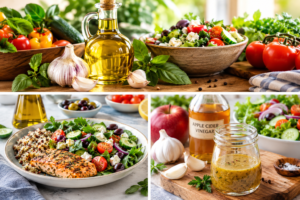
Garlic, olive oil, and apple cider vinegar are three simple ingredients that often appear in conversations about healthy eating.
They are sometimes described almost like natural remedies. But I don’t think of them that way.
I use them because they fit easily into meals I already enjoy.
Garlic adds a deep, savory flavor. Olive oil makes vegetables and other foods taste richer. Apple cider vinegar adds a sharp, acidic flavor to certain dishes.
I also wanted to know what these ingredients can realistically do, rather than assuming that one food can solve a health problem.
Here is what I have learned and how I actually use them in my kitchen.
1. Garlic: The Ingredient I Enjoy the Most
Of these three ingredients, garlic is probably the one I enjoy the most.
Garlic contains sulfur compounds, including compounds that are formed when garlic is crushed or chopped. Garlic has also been studied for possible effects on cholesterol, blood pressure, and blood sugar.
However, much of the research has focused on garlic supplements, rather than simply eating a few cloves of garlic with a meal. NCCIH notes that garlic supplements may have small effects on cholesterol, blood pressure, and blood sugar in certain groups, but these effects should not be confused with a treatment for a medical condition.
For me, the biggest reason to eat garlic is much simpler:
I genuinely like the taste.
How I Eat Roasted Garlic
I especially like roasted garlic.
When I eat meat, I often roast garlic with a little olive oil and eat it alongside the meal.
Something interesting happens when garlic is roasted. It becomes soft, milder, slightly sweet, and rich in flavor.
To me, roasted garlic almost has a roasted chestnut-like taste.
That makes it very different from raw garlic.
I don’t need a complicated recipe. I can simply roast a few cloves with olive oil and serve them with the rest of the meal.
This is one of my favorite ways to enjoy garlic.
Other Easy Ways I Use Garlic
I also use garlic with foods such as:
- Broccoli
- Oyster mushrooms
- Asparagus
- Vegetables
- Beans
- Fish
- Chicken
A small amount can make a simple meal taste much more interesting.
That’s important to me because healthy eating is easier to maintain when the food actually tastes good.
2. Olive Oil: More Than Just a Cooking Oil
Olive oil is another ingredient I use regularly.
Olive oil is rich in monounsaturated fat, and it is a traditional part of Mediterranean-style eating patterns that emphasize vegetables, fruits, whole grains, legumes, nuts, seeds, and other minimally processed foods.
That does not mean olive oil is a magic ingredient.
I think it is more useful to look at what olive oil replaces and what the overall meal looks like.
For example, using olive oil in place of butter or other fats higher in saturated fat can be one practical way to include more unsaturated fat in the diet.
Why I Like Garlic and Olive Oil Together
Garlic and olive oil are probably my favorite combination.
When I roast garlic with a little olive oil, the garlic becomes soft and flavorful, while the olive oil helps carry that rich flavor into the meal.
I especially like this combination with meat and vegetables.
It is simple, but it makes an ordinary meal feel more satisfying.
I Also Use Olive Oil in a Simple Yogurt Spread
One of my favorite combinations is something I started making with unsweetened Greek yogurt.
I mix:
- Unsweetened Greek yogurt
- A little olive oil
- A small amount of minced garlic
- A little salt
- Black pepper
- A small amount of allulose when I want a lightly sweet version
I spread it on whole-grain bread.
The combination is creamy, slightly tangy, savory, and lightly sweet. For me, it can be surprisingly satisfying—almost like a healthier-tasting alternative to a sweet spread.
When I want a savory version, I leave out the allulose and add a little more garlic and black pepper.
I like this kind of simple combination because it shows how a few ordinary ingredients can change the way a meal tastes.
3. Apple Cider Vinegar: I Don’t Actually Love It
Apple cider vinegar is different.
Honestly, I don’t particularly like the taste.
I don’t drink it every day, and I don’t force myself to have it every morning.
Sometimes I mix a small amount with water.
Other times, I use it when I mix noodles with a sauce.
The sharp flavor can work well with noodles, vegetables, cucumber, or other foods that need a little acidity.
For me, this is a much more realistic way to use apple cider vinegar than treating it like a daily health ritual.
What Does the Research Say?
Apple cider vinegar contains acetic acid and has been studied for several possible health effects.
Blood glucose is one of the better-studied areas, but the evidence is still limited. The American Heart Association notes that several small studies have reported modest changes in fasting blood glucose or A1C, particularly in people with type 2 diabetes, but there are not enough strong studies to treat apple cider vinegar as a proven therapy.
So I don’t use apple cider vinegar to replace a healthy diet, exercise, or medical treatment.
I simply use it occasionally as a food ingredient.
4. I Don’t Drink Apple Cider Vinegar Just Because It’s Popular
There is a lot of online advice telling people to drink apple cider vinegar first thing in the morning.
I don’t think everyone needs to do that.
If you enjoy it and it works well for you, it can be one way to include vinegar in your diet.
But if you don’t like it, there is no reason to turn it into an unpleasant daily ritual.
I prefer using it in food.
For example, I might add a small amount to:
- Mixed noodles
- Cucumber dishes
- Vegetable salads
- Bean salads
- Simple dressings
- Vegetable-based sauces
That feels much more natural to me.
5. Why I Prefer These Ingredients in Real Meals
The biggest lesson I take from these ingredients is that the whole meal matters more than any single ingredient.
It is tempting to look for one food that can protect the heart, improve blood sugar, reduce inflammation, or promote longevity.
Real-world eating is more complicated.
A more practical approach is to build meals around foods such as:
Vegetables + beans or fish + whole grains + a healthy oil
Then garlic can add flavor.
Olive oil can provide unsaturated fat.
Apple cider vinegar can add acidity without relying on a sugary sauce.
This way, the ingredients have a purpose without being treated as miracle foods.
Mediterranean-style eating is a good example of this broader approach. Olive oil is used as a major fat source, but it is consumed alongside vegetables, whole grains, legumes, nuts, seeds, and other foods—not as an isolated “health cure.”
6. One Simple Combination I Actually Enjoy
If I had to choose one combination from this article, it would be:
Roasted garlic + olive oil + meat + vegetables
I like roasting garlic with olive oil and eating it with meat.
The garlic becomes soft and slightly sweet, and the flavor reminds me of roasted chestnuts.
That is the kind of healthy habit I find easier to keep.
I am not eating roasted garlic because I expect it to fix a health problem.
I eat it because it tastes good, and it helps me enjoy a meal built around simple foods.
7. A Simple Noodle Idea With Apple Cider Vinegar
When I want to use apple cider vinegar, I sometimes add a small amount to a noodle dish.
I usually combine noodles with plenty of vegetables such as cucumber or cabbage, then add a sauce with a little vinegar.
The vinegar gives the dish a sharper, fresher flavor.
Again, I am not trying to make the vinegar the “healthy part” of the meal.
I am simply using it as an ingredient.
That distinction matters to me.
8. Don’t Confuse Food With Medicine
Garlic, olive oil, and apple cider vinegar can all be part of a healthy eating pattern.
But none of them should be treated as a cure or replacement for medical treatment.
Garlic supplements, in particular, can interact with some medicines and may increase bleeding risk, so people taking anticoagulants or preparing for surgery should discuss garlic supplements with their healthcare provider.
This is also why I prefer talking about these foods as ingredients, rather than natural medicines.
Food can support a healthy eating pattern without becoming a treatment.
9. One Important Food-Safety Point About Garlic and Oil
There is one thing worth remembering if you make garlic-infused oil at home.
Fresh garlic stored in oil at room temperature can create conditions that allow botulism-causing bacteria to grow.
The USDA recommends making garlic-in-oil fresh and refrigerating it at 40°F (4°C) or below for no more than 7 days. It can also be frozen for longer storage.
This is different from simply roasting garlic with olive oil and eating it as part of a meal.
The concern is mainly about storing fresh garlic in oil, especially at room temperature.
10. What I Really Like About These Three Ingredients
I don’t use these three ingredients in exactly the same way.
Garlic is the one I enjoy most. I especially like it roasted with olive oil and served with meat.
Olive oil is something I use regularly to cook and combine with other foods.
Apple cider vinegar is the one I use least. I don’t particularly like the taste, but I occasionally add it to water or noodle dishes because it can add a sharp flavor.
That is my real experience with them.
I don’t think healthy eating has to mean forcing yourself to eat foods you dislike.
It is more sustainable to find simple ingredients that fit naturally into meals you already enjoy.
What I Take Away From Garlic, Olive Oil & Apple Cider Vinegar
These three ingredients are not magic foods.
But they can each have a useful place in everyday cooking.
Garlic can make a simple meal much more flavorful.
Olive oil can add richness and unsaturated fat.
Apple cider vinegar can add acidity and flavor to certain dishes.
For me, the most important part is not taking any one ingredient in isolation.
It is using them as small pieces of a balanced meal.
That is how I actually use them—and that is more realistic for me than treating them as natural remedies.
Bottom Line
I don’t eat garlic, olive oil, and apple cider vinegar because I expect them to solve every health problem.
I use them because they make everyday food more enjoyable.
Roasted garlic with olive oil is one of my favorite combinations, especially with meat.
Apple cider vinegar is something I use only occasionally because I don’t love the taste.
And I have found that this approach works better for me: use foods you enjoy, add variety, and build healthy habits around real meals rather than relying on one “superfood.”
Disclaimer
This article is for general informational purposes only and is not medical advice. Garlic, olive oil, and apple cider vinegar are foods and ingredients, not substitutes for prescribed medication or medical treatment. If you have a medical condition or take medications, talk with your healthcare professional before making significant dietary changes or using concentrated supplements.