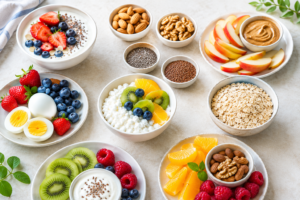
 Fruit is an easy choice for breakfast. Berries, apples, bananas, oranges, and kiwi provide natural sweetness, fiber, vitamins, and minerals with very little preparation.
However, most whole fruits do not provide much protein. If you want to make a fruit-based breakfast more complete, adding a food that provides protein, fiber, or both can be a simple approach.
You do not need a complicated recipe or a strict meal plan. A few simple combinations can turn a piece of fruit into a more balanced breakfast.
Here are 10 foods you can pair with fruit to add more protein and fiber to your morning meal.
Why Pair Fruit With Protein and Fiber?
Whole fruit already provides important nutrients, especially fiber, vitamins, and minerals. The goal is not to make fruit healthier because fruit is already a nutritious food.
Instead, pairing fruit with another food can help you include a wider variety of nutrients in the same meal.
For example, berries provide fiber and other nutrients, while plain Greek yogurt provides protein. Adding chia seeds can provide additional fiber.
A simple combination such as:
Berries + plain Greek yogurt + chia seeds
can give you several different nutrients without requiring a complicated breakfast.
Some foods are mainly useful for adding protein, while others provide more fiber. A few, such as beans and nuts, provide both.
1. Plain Greek Yogurt
Plain Greek yogurt is one of the easiest foods to pair with fruit when you want to add protein to breakfast.
Its mild flavor works well with many fruits, including strawberries, blueberries, raspberries, bananas, peaches, apples, and kiwi.
Try:
Plain Greek yogurt + strawberries
or
Plain Greek yogurt + blueberries + chia seeds
The fruit provides fiber and natural sweetness, while Greek yogurt adds protein.
A simple tip
I prefer plain Greek yogurt because I can add fresh or frozen fruit without making breakfast overly sweet. If you buy flavored yogurt, check the Nutrition Facts label for added sugar.
2. Oatmeal
Oatmeal is a simple whole-grain food that can add fiber to a fruit-based breakfast.
Oats contain soluble fiber, including beta-glucan. Adding fruit can provide additional fiber, flavor, and natural sweetness.
Try:
Oatmeal + blueberries + walnuts
or
Oatmeal + banana + ground flaxseed
Oatmeal is also easy to customize. You can add nuts, seeds, cinnamon, or a small amount of nut butter depending on what you like.
A simple tip
Frozen berries are especially convenient. I often find them useful because they can be added directly to warm oatmeal and soften as the oatmeal sits.
3. Eggs
Eggs are a convenient source of protein and can be paired with fruit even if you prefer a savory breakfast.
You do not need to mix fruit into your eggs. Simply serve fruit on the side.
Try:
Boiled eggs + kiwi
Scrambled eggs + strawberries
or
Eggs + whole-grain toast + orange slices
This combination can be useful when you want a breakfast that is more savory than sweet.
A simple tip
If you usually eat a sweet breakfast, try making eggs the main part of the meal and keeping fruit on the side.
4. Cottage Cheese
Cottage cheese provides protein and has a mild flavor that works surprisingly well with fruit.
It can be paired with:
-
Strawberries
-
Blueberries
-
Peaches
-
Kiwi
-
Pears
-
Pineapple
Try:
Cottage cheese + sliced peaches
or
Cottage cheese + berries + a few nuts
The combination is simple and requires little preparation.
A simple tip
If you do not like the texture of cottage cheese, you can blend it until smooth and use it as a creamy base for a fruit bowl.
5. Chia Seeds
Chia seeds are a convenient way to add fiber to breakfast.
They can be mixed into yogurt, oatmeal, smoothies, or fruit bowls without requiring much preparation.
Try:
Greek yogurt + berries + chia seeds
or
Oatmeal + banana + chia seeds
Chia seeds absorb liquid and develop a thicker texture, which makes them easy to incorporate into breakfast foods.
A simple tip
If you are not used to eating much fiber, increase high-fiber foods gradually and drink enough fluids throughout the day.
6. Nuts and Nut Butter
Nuts can add protein, fiber, and unsaturated fats to a fruit-based breakfast.
Good options include:
-
Walnuts
-
Almonds
-
Pistachios
-
Peanuts
Nut butter can also be an easy option when you want something that requires almost no preparation.
Try:
Apple + peanut butter
Banana + almond butter
or
Berries + Greek yogurt + walnuts
The combination of fruit and nuts also adds different textures to a simple breakfast.
A simple tip
Nuts and nut butter are relatively calorie-dense, so a small serving can be enough. When buying nut butter, check the ingredient list and choose an option that fits your preferences.
7. Whole-Grain Toast
Whole-grain toast can add fiber and make a fruit-based breakfast more substantial.
You can add a protein-rich topping and serve fruit on the side.
Try:
Whole-grain toast + peanut butter + banana
or
Whole-grain toast + eggs + strawberries
When choosing bread, look beyond words such as “multigrain” or “natural” on the front of the package. Checking the ingredient list and Nutrition Facts label can give you more useful information about the product.
A simple tip
If you want more fiber, look for a whole-grain bread that fits your taste and dietary needs.
8. Ground Flaxseed
Ground flaxseed is another easy way to add fiber to breakfast. It also provides the plant-based omega-3 fatty acid ALA.
It is especially easy to add to foods you are already eating.
Try:
Oatmeal + banana + ground flaxseed
or
Greek yogurt + strawberries + ground flaxseed
Ground flaxseed can also be added to smoothies or fruit bowls.
A simple tip
A small amount can be an easy starting point. Store flaxseed according to the package directions, particularly after opening.
9. Beans
Beans may not be the first food that comes to mind when you think about eating fruit for breakfast, but they can work well in a savory meal.
Black beans, chickpeas, kidney beans, and other legumes provide both plant-based protein and fiber.
Try:
Eggs + black beans + avocado + orange slices
or
Whole-grain toast + beans + fruit on the side
This is a good option if you prefer savory breakfasts instead of yogurt or oatmeal.
A simple tip
Canned beans can save preparation time. If sodium is a concern, compare labels or rinse canned beans before eating.
10. Avocado
Avocado provides fiber and unsaturated fats and can add a creamy texture to breakfast.
It is especially easy to pair with whole-grain toast and a protein-rich food.
Try:
Avocado toast + eggs + strawberries
or
Whole-grain toast + avocado + kiwi on the side
Avocado does not provide the same amount of protein as foods such as eggs or Greek yogurt, so think of it mainly as a source of fiber and unsaturated fat in this type of breakfast.
A simple tip
Avocado is relatively calorie-dense, so you do not need a large amount to add flavor and texture.
Easy Fruit and Protein Pairings
You do not need to follow a specific recipe. Start with the fruit you have and choose a food that adds protein or fiber.
If you have berries
Try:
Berries + plain Greek yogurt + chia seeds
This combination adds protein from Greek yogurt and fiber from the fruit and chia seeds.
If you have an apple
Try:
Apple + peanut butter + whole-grain toast
This gives you fruit along with protein, fiber, and unsaturated fat.
If you have a banana
Try:
Banana + oatmeal + walnuts
Oatmeal and banana provide fiber, while walnuts add healthy fats and some protein.
If you have kiwi
Try:
Kiwi + cottage cheese + ground flaxseed
This is a simple combination that adds protein and fiber.
If you have an orange
Try:
Orange + eggs + whole-grain toast
This works well if you prefer a savory breakfast with fruit on the side.
A Simple Formula: Fruit + Protein + Fiber
One easy way to build a fruit-based breakfast is to think about three categories:
Fruit
-
Berries
-
Apple
-
Banana
-
Kiwi
-
Orange
-
Pear
-
Peaches
Protein-rich foods
-
Plain Greek yogurt
-
Eggs
-
Cottage cheese
-
Nuts
-
Nut butter
-
Beans
Fiber-rich foods
-
Oatmeal
-
Chia seeds
-
Ground flaxseed
-
Whole-grain toast
-
Beans
-
Nuts and seeds
You do not need to choose something from every category at every meal. The formula is simply a practical way to think about combining foods with different nutritional strengths.
For example, Greek yogurt with berries may already be a simple breakfast. Adding chia seeds or oatmeal is another option if you want additional fiber.
How I Keep My Fruit Breakfast Simple
I used to eat fruit by itself in the morning when I was in a hurry. It was convenient, but I found it easier to make breakfast feel more complete when I added another simple food.
One of my favorite combinations is strawberries with plain Greek yogurt. I also like adding nuts or seeds when I have them available.
Frozen berries are another convenient option on busy mornings. I can keep them in the freezer and add them to yogurt or oatmeal without much preparation.
For me, the important part is not making breakfast perfect. It is finding combinations that are simple enough to prepare regularly.
Common Mistakes When Pairing Fruit With Other Foods
Choosing Products With Too Much Added Sugar
Some foods that seem healthy can contain added sugar.
Flavored yogurt, sweetened nut butter, granola, and some breakfast cereals can vary considerably from one product to another.
Checking the Nutrition Facts label and ingredient list can help you compare products.
Trying to Add Too Many Foods
You do not need ten different ingredients to create a nutritious breakfast.
A combination such as:
Greek yogurt + berries + chia seeds
can be simple and practical.
Assuming Every Food Provides Both Protein and Fiber
Not every food on this list provides the same nutrients.
Greek yogurt and eggs are useful protein sources, while oatmeal and chia seeds are especially useful for adding fiber. Beans and nuts can provide both protein and fiber.
Thinking about each food’s main nutritional contribution makes it easier to create combinations that fit your needs.
Forgetting About Portion Size
Even nutritious foods can contribute a lot of calories when eaten in large amounts.
This is particularly relevant for nuts, nut butter, and avocado. You do not need large portions to include them in breakfast.
Can Pairing Fruit With Protein and Fiber Support Blood Sugar Management?
Pairing fruit with foods that provide protein, fiber, or healthy fats can be one practical way to create a more balanced meal.
However, there is no single breakfast combination that works the same way for everyone. The type and amount of fruit, the other foods in the meal, portion size, activity, and individual health factors can all affect how someone responds to a meal.
If you have diabetes or another condition that affects blood sugar, talk with your healthcare professional or a registered dietitian about the eating pattern that is appropriate for you.
Frequently Asked Questions
What foods can I eat with fruit for more protein?
Plain Greek yogurt, eggs, cottage cheese, nuts, nut butter, and beans are simple options that can add protein to a fruit-based breakfast.
What foods can I eat with fruit for more fiber?
Oatmeal, chia seeds, ground flaxseed, whole-grain toast, beans, nuts, and seeds can add fiber to a breakfast that includes fruit.
What is a good fruit and protein breakfast?
Plain Greek yogurt with berries, eggs with fruit on the side, or cottage cheese with peaches are simple choices.
Can I eat fruit and Greek yogurt every morning?
Fruit and plain Greek yogurt can be a convenient breakfast combination. However, rotating different fruits, grains, seeds, nuts, and protein sources can add variety to your overall diet.
Is fruit alone enough for breakfast?
It depends on your appetite, nutritional needs, and overall eating pattern. Fruit can be a light breakfast or snack, while adding protein or fiber may make the meal more substantial for some people.
Do I need both protein and fiber at every breakfast?
Not necessarily. Your overall diet matters more than trying to meet a specific formula at every meal. The fruit-plus-protein-plus-fiber approach is simply an easy way to build variety into breakfast.
Final Thoughts
Fruit is already a nutritious food, but you do not always have to eat it by itself.
Adding plain Greek yogurt, eggs, oatmeal, cottage cheese, chia seeds, nuts, whole-grain toast, flaxseed, beans, or avocado can give you simple ways to combine fruit with more protein, fiber, or healthy fats.
You also do not need complicated recipes.
Start with a fruit you enjoy and add one food that provides a nutrient you want more of. For example, try berries with Greek yogurt, an apple with peanut butter, or banana with oatmeal and walnuts.
The best breakfast is often one that is simple, enjoyable, and realistic enough to make regularly.
Health Note: This article is for general educational purposes and is not intended to provide medical advice, diagnose a condition, or replace advice from a qualified healthcare professional.
1 thought on “10 Foods to Pair With Fruit for Protein and Fiber”