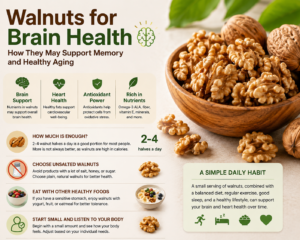
Walnuts are easy to overlook, but they are one of the simplest foods to add to a healthy breakfast. They contain healthy unsaturated fats, fiber, plant-based protein, vitamins, minerals, and alpha-linolenic acid (ALA), a plant-based omega-3 fatty acid.
Because of these nutrients, walnuts can be a useful part of a balanced eating pattern that supports overall health, including brain health.
Eating walnuts does not guarantee better memory or prevent brain disease. However, adding a small portion to a balanced breakfast can be an easy way to include more nutrient-rich foods in your daily routine.
Why Are Walnuts Good for Brain Health?
Walnuts contain several nutrients that make them an interesting food to include in a brain-friendly diet.
1. Healthy Fats
One of the main reasons walnuts stand out is their fat content. Most of the fat in walnuts is unsaturated fat.
Walnuts also contain ALA, a plant-based omega-3 fatty acid. Omega-3 fats are important components of cell membranes and play important roles throughout the body.
Adding walnuts to a meal can therefore be a simple way to include more healthy fats without relying on highly processed snack foods.
2. Antioxidant Compounds
Walnuts contain antioxidant compounds, including polyphenols.
Antioxidants help protect cells from oxidative stress. This does not mean that eating walnuts alone can prevent a specific disease, but foods containing antioxidant compounds can be part of an overall healthy eating pattern.
Eating a variety of fruits, vegetables, nuts, seeds, and whole grains is generally more useful than focusing on one food as a “superfood.”
3. Fiber
Walnuts also provide dietary fiber.
Fiber is important for digestive health and can contribute to feeling satisfied after eating. Including fiber-rich foods in breakfast can also make a meal more balanced when combined with protein, fruit, or whole grains.
Why Walnuts Are Different From Other Nuts
Many nuts are nutritious, but walnuts have one feature that makes them particularly interesting: they provide ALA, a plant-based omega-3 fatty acid.
Almonds, pistachios, and other nuts also provide valuable nutrients, so walnuts do not have to replace other nuts in your diet.
Instead, I like to think of walnuts as another option to rotate into a healthy eating routine.
The important point is not to find one “perfect” nut. A variety of nutrient-rich foods can make a diet more enjoyable and balanced.
Why I Like Eating Walnuts in the Morning
I like walnuts in the morning because they are easy to add to foods I already eat.
I do not need to prepare a separate recipe. I can simply add a few walnuts to plain Greek yogurt and berries, or sprinkle them over oatmeal.
For me, this makes breakfast easier when I do not have much time in the morning. Having simple foods available also makes it less tempting to reach for a highly processed snack later.
How to Eat Walnuts at Breakfast
You do not need a complicated recipe to enjoy walnuts. A small amount can easily be added to familiar breakfast foods.
1. Walnuts With Plain Greek Yogurt and Berries
Plain Greek yogurt provides protein, while berries add natural sweetness and fiber.
Adding a few walnuts gives the meal healthy fats and a satisfying crunch.
This is one of my favorite simple combinations because it takes very little preparation.
2. Walnuts With Oatmeal
Oatmeal and walnuts make an easy breakfast combination.
You can add walnuts after preparing the oatmeal and then top it with berries, sliced fruit, or a small amount of cinnamon.
If you are trying to make oatmeal a healthier everyday meal, be careful with flavored oatmeal packets and sugary toppings. Plain oats give you more control over how much added sugar goes into your bowl.
3. Walnuts With Fruit
Fruit and walnuts can also make a simple snack or light breakfast.
For example, you could pair an apple with a small portion of walnuts.
The fruit provides carbohydrates and fiber, while walnuts add healthy fats, a small amount of plant-based protein, and additional nutrients.
A Simple Morning Walnut Routine
My morning routine does not have to be complicated.
On busy mornings, I may have plain Greek yogurt with berries and a few walnuts. On other days, I add walnuts to oatmeal with a little cinnamon.
Having these foods ready makes it easier to put together a simple breakfast without spending much time in the kitchen.
This is one reason I prefer practical food habits over complicated breakfast plans. A healthy habit is easier to maintain when it fits naturally into everyday life.
How Many Walnuts Should You Eat?
A common serving size for nuts is about 1 ounce, or 28 grams.
For walnuts, this is roughly a small handful, although the exact number of walnut halves can vary depending on their size.
You do not need to eat a large amount to include walnuts in your diet. Starting with a small portion can make it easier to add them to yogurt, oatmeal, fruit, or a salad.
Walnuts are also relatively calorie-dense because they contain a significant amount of fat. Eating more is not necessarily better, so portion size still matters.
Your appropriate portion may also depend on your overall diet, calorie needs, and health goals.
What Kind of Walnuts Should You Choose?
When buying walnuts, I prefer simple options without unnecessary added ingredients.
Look for:
- Unsalted walnuts
- Raw or dry-roasted walnuts
- No added sugar
- No candy coating
- A short ingredient list
Flavored or coated walnuts can contain added sugar, sodium, or other ingredients that you may not need.
If you are eating walnuts regularly, plain walnuts are usually the easiest option because you can control what you add to them.
How to Store Walnuts
Walnuts contain a high amount of unsaturated fat, which means they can become rancid if stored improperly for too long.
Keep unopened walnuts in a cool, dry place according to the package instructions.
Once opened, storing walnuts in an airtight container can help maintain their freshness. If you do not eat them frequently, refrigeration or freezing can help extend their shelf life.
If walnuts develop an unusual smell, bitter flavor, or stale taste, it is better not to eat them.
Buying a smaller package can also be practical if you do not use walnuts very often.
Are Walnuts Better in the Morning?
There is no strong reason that walnuts must be eaten in the morning to provide nutritional benefits.
You can eat walnuts at breakfast, as a snack, with lunch, or as part of another meal.
I like eating them in the morning mainly because they are easy to combine with foods such as oatmeal, yogurt, berries, and fruit.
The bigger picture is your overall eating pattern. A nutritious food can be useful at different times of the day.
Walnuts and Blood Sugar
Walnuts can also fit into a balanced eating pattern for people who pay attention to blood sugar.
Unlike many sweet snacks, walnuts contain very little carbohydrate and provide fat, fiber, and some protein.
For example, instead of eating a sweet snack by itself, you could pair an apple with a small portion of walnuts.
Another option is plain Greek yogurt with berries and walnuts.
These combinations bring several different nutrients together rather than relying mainly on refined carbohydrates or added sugar.
However, walnuts are not a treatment for diabetes and should not be used as a replacement for medical care or prescribed treatment.
If you have diabetes or another medical condition, your overall eating plan should be based on your individual needs and your healthcare professional’s advice.
Portion Size Still Matters
Because walnuts are nutrient-dense, it can be easy to eat more than you intended.
A few extra walnuts may not seem like much, but the calories can add up when you regularly eat large portions.
Instead of eating directly from a large bag, try putting a small serving into a bowl.
This simple habit makes it easier to see how much you are eating.
For me, a small portion is usually enough to add texture and flavor to breakfast without making the meal feel too heavy.
Common Mistakes When Eating Walnuts
Walnuts are nutritious, but a few simple mistakes can make them less suitable for your everyday routine.
Eating Too Many
Walnuts are healthy, but more is not always better. Large portions can add a significant amount of calories.
Choosing Sugary Coated Walnuts
Candied or chocolate-coated walnuts may contain a considerable amount of added sugar.
If your goal is a simple, nutritious snack, plain walnuts are usually a better everyday choice.
Choosing Very Salty Varieties
Salted walnuts can add unnecessary sodium, especially if you already eat many packaged foods.
Unsalted walnuts give you more control over the amount of sodium in your diet.
Treating Walnuts Like a Medicine
Walnuts can be part of a healthy diet, but they should not be viewed as a treatment for memory problems, diabetes, heart disease, or other medical conditions.
One food cannot replace an overall healthy lifestyle or medical treatment when it is needed.
Who Should Be Careful With Walnuts?
People with a tree nut allergy should avoid walnuts and follow the advice of their healthcare professional.
If you have experienced symptoms such as swelling, hives, difficulty breathing, or other signs of an allergic reaction after eating tree nuts, seek appropriate medical advice rather than trying walnuts on your own.
People who have been advised to follow a specific diet for a medical condition should also consider their individual dietary needs before adding large amounts of nuts.
Simple Morning Walnut Ideas
Here are a few easy combinations you can try:
Option 1: Yogurt Bowl
- Plain Greek yogurt
- Strawberries or other berries
- A small portion of walnuts
Option 2: Oatmeal Bowl
- Plain oatmeal
- Walnuts
- Berries or sliced fruit
- A little cinnamon
Option 3: Quick Snack
- One piece of fruit
- A small portion of walnuts
Option 4: Toast and Walnuts
- Whole-grain toast
- Plain yogurt or another protein-rich food
- A few walnuts
- Fruit on the side
The goal is not to create a perfect breakfast every morning. Simple combinations that include protein, fiber, healthy fats, and minimally processed foods can be easier to maintain.
Frequently Asked Questions
Are walnuts good for brain health?
Walnuts contain healthy unsaturated fats, ALA, fiber, and antioxidant compounds that make them a nutritious food to include in an overall healthy eating pattern. However, eating walnuts alone does not guarantee better memory or prevent brain disease.
How many walnuts should I eat in the morning?
A typical serving of nuts is about 1 ounce, or 28 grams. You can start with a smaller portion if you are adding walnuts to other foods such as yogurt or oatmeal.
Can I eat walnuts every day?
For most people without a walnut allergy or another dietary restriction, walnuts can be included regularly as part of a balanced diet. Portion size is still important because walnuts are calorie-dense.
Are walnuts better than almonds?
Neither needs to be considered universally “better.” Different nuts provide different combinations of nutrients. Walnuts are particularly notable for providing the plant-based omega-3 fat ALA.
Can walnuts help with blood sugar control?
Walnuts can fit into a balanced eating pattern because they are relatively low in carbohydrates and provide healthy fats, fiber, and some protein. However, they are not a treatment for diabetes or a substitute for medical care.
Should I eat walnuts in the morning or at night?
There is no requirement to eat walnuts at a specific time of day. Morning can simply be a convenient time to add them to oatmeal, yogurt, or fruit.
The Bottom Line
Walnuts are a simple, nutrient-rich food that can fit easily into a healthy morning routine.
Their healthy unsaturated fats, ALA, fiber, and antioxidant compounds make them a useful addition to a balanced diet.
You do not need a complicated recipe. A small portion of walnuts with plain Greek yogurt and berries, oatmeal, or fruit can turn a simple breakfast into a more balanced meal.
The most important thing is consistency and variety. Instead of relying on one food for a specific health benefit, focus on building everyday meals around vegetables, fruits, whole grains, protein-rich foods, nuts, seeds, and other minimally processed foods.
Health Note
Walnuts are a nutrient-rich food, but they are not a treatment for memory problems, diabetes, heart disease, or other medical conditions. Individual dietary needs can vary. If you have a nut allergy, a medical condition, or specific dietary restrictions, follow your healthcare professional’s advice.