When people think about eating for better blood sugar, they often focus on what they should avoid.
I think it can be just as useful to look at what you can add to your plate.
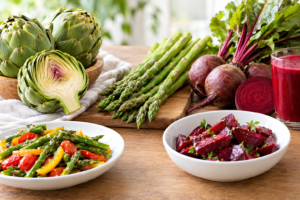
Artichokes, asparagus, and beets may not be the first vegetables that come to mind, but they each offer something different. They provide fiber, vitamins, minerals, and plant compounds that can fit into a balanced eating pattern.
I don’t think of these vegetables as foods that can prevent diabetes or stop a blood sugar spike. Instead, I see them as practical foods that can add more vegetables and variety to everyday meals.
1. Artichokes: A Simple Way to Add More Fiber
Artichokes are a good source of dietary fiber and are relatively low in calories.
They also contain inulin, a type of fermentable fiber that can be used by bacteria in the gut. Fiber adds bulk to meals and can help make them more satisfying.
This is one reason I like adding fiber-rich vegetables to meals that include foods such as rice, bread, or pasta.
Rather than trying to eliminate carbohydrates completely, adding vegetables and a source of protein can make the overall meal more balanced.
For more practical food ideas, see 4 Foods for Better Blood Sugar Control.
Artichokes and Plant Compounds
Artichokes contain several plant compounds, including chlorogenic acid and other polyphenols. These compounds have been studied for their antioxidant properties and possible relationships with metabolic health.
However, research on individual plant compounds does not mean that eating artichokes will directly lower blood sugar.
It is more realistic to think of artichokes as a nutritious vegetable that contributes fiber and plant compounds to an overall healthy eating pattern.
Artichokes also provide minerals such as potassium and magnesium. Magnesium is involved in normal glucose metabolism and insulin function, while potassium plays an important role in normal fluid balance and blood pressure regulation.
Simple Ways to Eat Artichokes
If you are not used to cooking artichokes, they can seem intimidating at first.
You can try them:
- Steamed and served with a simple dip
- Roasted with olive oil and herbs
- Added to salads
- Mixed with other vegetables
- Served with chicken, fish, eggs, or beans
You don’t need a complicated recipe. A simple preparation can make it easier to include artichokes in your meals.
2. Asparagus: Light, Versatile, and Easy to Add to Meals
Asparagus is one of those vegetables that can be added to a meal without making it feel heavy.
It is relatively low in calories and provides dietary fiber, folate, vitamin C, and vitamin K.
When a meal contains a large amount of rice, bread, noodles, or another carbohydrate, adding vegetables such as asparagus can change the overall balance of the plate.
For example, instead of making noodles the largest part of the meal, you could add asparagus along with eggs, chicken, tofu, or another protein.
Asparagus and Plant Compounds
Asparagus contains a variety of plant compounds, including flavonoids such as rutin.
These compounds are one reason vegetables are often included in eating patterns rich in plant foods.
But I would not think of asparagus as a special “blood sugar vegetable.”
Its value comes from the combination of fiber, vitamins, minerals, and plant compounds it adds to the overall diet.
Eating different vegetables also gives you a wider range of nutrients instead of relying on the same food every day.
Asparagus and Gut Health
Asparagus contains dietary fiber that can be fermented by gut bacteria.
The relationship between the gut microbiome and metabolic health is an active area of research. However, this does not mean that eating asparagus alone will improve blood sugar or prevent diabetes.
A more practical approach is to include asparagus and other vegetables regularly as part of a varied, fiber-rich diet.
3. Beets: A Colorful Source of Fiber and Plant Compounds
Beets are easy to recognize because of their deep red-purple color.
That color comes largely from betalains, a group of plant pigments with antioxidant properties.
Beets also provide dietary fiber, potassium, folate, and naturally occurring nitrate.
Because beets have a naturally sweet taste, some people may wonder whether they fit into a blood-sugar-conscious diet.
They can.
Beets do contain carbohydrates and natural sugars, so portion size still matters. But sweetness by itself does not mean a food needs to be avoided.
What matters is how the food fits into the entire meal.
Beets and Dietary Nitrate
One of the most interesting components of beets is dietary nitrate.
Nitrate from vegetables can contribute to the body’s production of nitric oxide, which is involved in normal blood vessel function. Research on nitrate-rich vegetables, including beetroot, has examined their potential effects on blood pressure and vascular function.
This does not mean that eating beets will “clean your blood vessels” or prevent heart disease.
Instead, beets can be one colorful vegetable in a diet that includes a variety of vegetables and other nutrient-rich foods.
Easy Ways to Eat Beets
You can enjoy beets:
- Roasted with olive oil
- Added to salads
- Steamed or boiled
- Mixed with other roasted vegetables
- Added to a grain and vegetable bowl
- Blended into a juice
If you are watching your carbohydrate intake, a moderate serving can be combined with vegetables and a protein source rather than making beets the main carbohydrate in the meal.
What These Three Vegetables Have in Common
Artichokes, asparagus, and beets are quite different from one another.
Artichokes stand out for their fiber and inulin.
Asparagus provides fiber, folate, vitamins, and a variety of plant compounds.
Beets provide fiber, potassium, folate, betalains, and naturally occurring nitrate.
None of them should be considered a natural form of insulin.
Their value is much simpler: they are different vegetables that can add variety, fiber, and plant nutrients to everyday meals.
My Experience With Artichokes, Asparagus, and Beets
I eat asparagus quite often because it is easy to prepare and goes well with other vegetables.
I usually stir-fry it with a little oil and other vegetables, or steam it and enjoy it with a spicy sauce. I like the taste and texture, and it is an easy way for me to add more vegetables to a meal.
I have also tried beets in a few different ways. Sometimes I blend them into a juice, and other times I steam them and eat them with other vegetables. The natural sweetness of beets makes them a little different from the vegetables I usually eat, but I enjoy adding them to my meals from time to time.
Artichokes are different for me because I have never actually eaten them. I have seen them in recipes, but I have never tried cooking them myself. I am not sure yet how I will prepare them, but after learning more about their fiber and other nutrients, I would like to find a simple recipe and give them a try.
I don’t try to completely avoid carbohydrates. Instead, I like to combine a moderate amount of carbohydrate with plenty of vegetables and a source of protein or healthy fat.
For example, I often enjoy asparagus with eggs and whole-grain toast, or have beets with other vegetables and a protein source. Once I learn how to prepare artichokes, I would also like to try adding them to a chicken and vegetable meal.
For me, healthy eating does not mean finding one perfect food. I enjoy trying different vegetables, especially when they are simple to prepare and foods I actually like.
Do These Vegetables Prevent Diabetes?
No single vegetable can guarantee diabetes prevention.
Artichokes, asparagus, and beets can all be part of a nutritious eating pattern, but diabetes risk is influenced by many factors, including overall diet, physical activity, body weight, sleep, family history, and other individual factors.
That is why I prefer to think about these vegetables as foods that support a balanced eating pattern, rather than foods that prevent diabetes on their own.
Can These Vegetables Help With Blood Sugar?
These vegetables can fit well into a blood-sugar-conscious meal, especially when they add more vegetables and fiber to the plate.
However, individual blood sugar responses vary. For another example of how a single food can fit into a balanced eating pattern, see Pistachios and Blood Sugar.
The amount and type of carbohydrate, portion size, cooking method, and foods eaten with the meal can all matter.
So rather than asking which vegetable will prevent a blood sugar spike, it may be more useful to ask:
How can I make this entire meal more balanced?
For example, instead of eating a large bowl of noodles by itself, you could add asparagus and a protein source. Instead of making rice the largest part of the meal, you could include more vegetables and a moderate serving of rice.
The goal is not to avoid every carbohydrate. It is to build meals that work well for your own eating pattern.
For more simple ideas, see 3 Lower-Sugar Snacks.
Simple Meal Ideas
Artichoke + Chicken + Vegetables
Add steamed or roasted artichokes to a plate with chicken and other vegetables. A moderate serving of rice or another carbohydrate can complete the meal.
Asparagus + Eggs + Whole-Grain Toast
Cook asparagus with eggs and serve it with a moderate portion of whole-grain toast.
Beets + Salad + Protein
Add roasted beets to a vegetable salad and pair them with eggs, chicken, fish, beans, or tofu.
These simple combinations make it easier to include more vegetables without making one food the focus of the entire meal.
Frequently Asked Questions
Are artichokes good for blood sugar?
Artichokes can be part of a balanced diet because they provide dietary fiber and other nutrients. However, they should not be considered a treatment for high blood sugar or diabetes.
Is asparagus a low-carbohydrate vegetable?
Asparagus is relatively low in carbohydrate compared with many staple carbohydrate foods and provides fiber and several vitamins and minerals. It can be an easy addition to meals containing rice, bread, pasta, or potatoes.
Are beets okay for people watching blood sugar?
Yes. Beets can fit into a balanced diet. They contain natural sugars and carbohydrates, so portion size and the rest of the meal still matter.
Which is the best of the three?
There is no single best choice for everyone.
Artichokes, asparagus, and beets have different nutritional profiles, so rotating different vegetables is a practical way to add variety to your diet.
Can these vegetables replace diabetes medication?
No.
These are foods, not medications. If you take medication for diabetes or another medical condition, do not change or stop your medication because of dietary changes without talking with your healthcare professional.
Final Thoughts
Artichokes, asparagus, and beets may not be everyday vegetables for everyone, but they are worth trying.
I don’t think of them as “magic” foods for blood sugar.
Instead, I see them as three different ways to add more vegetables, fiber, and plant nutrients to everyday meals.
A balanced meal does not have to be perfect. For me, adding vegetables I enjoy and making small changes to the way I build a meal is a practical approach that I can continue over time.
Health Note
This article is for general nutrition information and is not medical advice. No single food can prevent or treat diabetes. Individual blood sugar responses can vary. If you have diabetes, prediabetes, take glucose-lowering medication, or have specific dietary needs, talk with your healthcare professional before making major dietary changes.