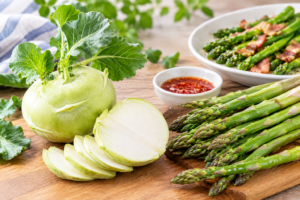
When I think about vegetables that are easy to enjoy, asparagus is one of the first that comes to mind.
I have eaten asparagus many times over the years. I like to steam it and dip it in a little spicy sauce, and I have also cooked it with bacon. I like the texture and flavor of asparagus, so it has been a vegetable I have eaten fairly often.
Kohlrabi, however, is a different story.
I do not think I have ever eaten kohlrabi before. In fact, I became interested in it while researching this article. The more I looked into kohlrabi, the more I realized that it contains a variety of nutrients and naturally occurring plant compounds.
That made me think, why haven’t I tried it before?
Healthy eating does not always mean eating the same familiar vegetables. Sometimes, learning about a vegetable we have never tried can be a good reason to add something new to our meals.
Kohlrabi and asparagus have different flavors and textures, but both can be part of a balanced diet and provide fiber, vitamins, minerals, and naturally occurring plant compounds.
They are not miracle foods, and no single vegetable can prevent or cure disease. Instead, their value comes from including a variety of vegetables in an overall healthy eating pattern.
What Makes Kohlrabi a Healthy Vegetable?
.Kohlrabi may not be as familiar as broccoli, cabbage, or cauliflower, but it belongs to the cruciferous vegetable family. Other cruciferous vegetables include Brussels sprouts, kale, and radishes.
Kohlrabi provides dietary fiber, vitamin C, potassium, and other nutrients. It also contains naturally occurring plant compounds called glucosinolates, which are characteristic of many cruciferous vegetables.
These compounds have received considerable scientific attention because of their role in the formation of other biologically active compounds when cruciferous vegetables are cut, chewed, or digested.
That does not mean that eating kohlrabi prevents cancer or treats a disease.
Instead, it is one reason cruciferous vegetables continue to be studied as part of healthy dietary patterns.
For everyday eating, I think the biggest advantage of kohlrabi may simply be that it gives us another nutritious vegetable to choose from.
Kohlrabi Is a Good Source of Vitamin C
One nutrient that stands out in kohlrabi is vitamin C.
Vitamin C is an essential nutrient with antioxidant properties. It also plays important roles in normal immune function, collagen formation, and helping the body absorb iron from plant foods.
Getting vitamin C from a variety of fruits and vegetables is one simple way to add more nutrient-rich foods to your diet.
Kohlrabi can be eaten raw or cooked, so there are several ways to include it in meals.
Its crisp texture makes it suitable for salads and vegetable sticks, while cooking gives it a softer texture and a slightly different flavor.
Glucosinolates and Cruciferous Vegetables
Kohlrabi belongs to a group of vegetables known for naturally occurring glucosinolates.
Broccoli, cabbage, cauliflower, Brussels sprouts, and other cruciferous vegetables also contain these compounds.
When cruciferous vegetables are cut or chewed, glucosinolates can interact with enzymes in the plant and contribute to the formation of compounds that researchers have studied for their potential biological effects.
One of the best-known examples is the relationship between glucoraphanin and sulforaphane in broccoli.
Kohlrabi contains different glucosinolates, so it should not simply be described as another source of broccoli’s sulforaphane.
This is an important distinction because nutrition information online can sometimes make different vegetables sound as though they have exactly the same effects.
I think it is more useful to appreciate each vegetable for the nutrients and plant compounds it naturally provides.
What Makes Asparagus a Healthy Choice?
Asparagus is a vegetable I am much more familiar with.
It provides dietary fiber, folate, vitamin K, vitamin C, and other nutrients. It also contains naturally occurring plant compounds, including flavonoids and other antioxidant compounds.
Asparagus is also relatively low in calories, which makes it easy to include as a side dish without making a meal feel overly heavy.
For me, however, nutrition is only part of the reason I enjoy asparagus.
I genuinely like the flavor and texture.
My Experience: I Love Steamed Asparagus With Spicy Sauce
I have eaten asparagus many times, and one of my favorite ways to prepare it is very simple.
I steam the asparagus and dip it in a spicy sauce.
I like the texture of steamed asparagus. It becomes tender but still has a pleasant firmness, and the spicy sauce makes the flavor more enjoyable for me.
Because I actually enjoy eating it, asparagus has been a vegetable I have eaten fairly often.
I think this is an important part of healthy eating.
A food can have an impressive nutritional profile, but if you do not enjoy it, it can be difficult to make it part of your regular routine.
For me, asparagus is different because I like both the taste and texture.
My Other Favorite Way to Eat Asparagus: With Bacon
I have also cooked asparagus with bacon, and I have eaten it that way many times.
The combination is delicious. The savory flavor of bacon goes well with asparagus, and cooking them together creates a satisfying side dish.
Of course, bacon is a processed meat and can be relatively high in sodium and saturated fat, so I would not consider bacon the reason asparagus is healthy.
For me, it is more of a flavor ingredient.
Using a smaller amount of bacon can add flavor to a larger serving of vegetables. You can also add garlic, black pepper, or other seasonings if you want more flavor without relying on a large amount of bacon.
The important thing is to look at the whole meal rather than labeling one ingredient as either completely “good” or “bad.”
I Have Never Tried Kohlrabi
This is probably the most interesting part of researching this article for me.
I do not think I have ever eaten kohlrabi.
Before writing this article, it was not a vegetable I paid much attention to.
But while researching kohlrabi, I learned more about its vitamin C, fiber, and naturally occurring plant compounds. That made me curious enough to want to try it.
Sometimes, writing about food can actually introduce us to foods we might otherwise overlook.
Now I would like to look for kohlrabi at the grocery store and see what it tastes like.
I am especially curious about the texture because I have read that raw kohlrabi can be crisp and mild, while cooking makes it softer.
I usually enjoy vegetables with a little crunch, so trying raw kohlrabi in a salad or as a simple snack may be a good place for me to start.
How to Eat Kohlrabi
If you have never tried kohlrabi, there are several simple ways to prepare it.
Raw Kohlrabi
Raw kohlrabi has a crisp texture and a mild flavor.
You can:
- Slice it thinly for a salad
- Cut it into sticks for a snack
- Shred it into a slaw
- Add it to a vegetable platter
- Serve it with a yogurt-based dip
Because of its crunchy texture, raw kohlrabi could be a good alternative when you want something fresh and crisp.
Cooked Kohlrabi
Kohlrabi can also be:
- Steamed
- Roasted
- Stir-fried
- Added to soups
- Cooked with other vegetables
Cooking changes its texture, so trying it both raw and cooked may be the easiest way to figure out which preparation you prefer.
Since I enjoy steamed vegetables, I would probably start by lightly steaming kohlrabi and seasoning it simply.
Easy Ways to Eat Asparagus
Asparagus is already familiar to me, and I think its versatility is one of its best qualities.
Besides steaming it with spicy sauce or cooking it with bacon, you can:
- Add asparagus to scrambled eggs or omelets
- Roast it with garlic
- Serve it with fish or chicken
- Add it to a grain bowl
- Toss it with other roasted vegetables
- Add it to soups
- Sauté it with a small amount of olive oil
You do not need an elaborate recipe.
Sometimes simply steaming or roasting a vegetable and adding a little seasoning is enough.
Kohlrabi and Asparagus Can Add Variety to Your Diet
One thing I like about these two vegetables is that they can add variety to meals in different ways.
Kohlrabi can provide a crisp texture when eaten raw, while asparagus becomes tender and flavorful when steamed or roasted.
Instead of trying to find one vegetable that is “the healthiest,” I think it is more practical to eat different vegetables throughout the week.
For example, one meal might include broccoli, another might include asparagus, and another could include kohlrabi.
Different vegetables provide different combinations of nutrients and plant compounds.
That variety is one of the reasons I am interested in trying kohlrabi after researching it for this article.
A Simple Healthy Meal With Vegetables
Both kohlrabi and asparagus can easily fit into a balanced meal.
For example, you could combine:
Protein:
Eggs, chicken, fish, tofu, beans, or lentils
Vegetables:
Asparagus, kohlrabi, broccoli, spinach, or other vegetables
Whole grains:
Brown rice, quinoa, or whole-grain bread
Healthy fats:
Nuts, seeds, avocado, or a small amount of olive oil
You do not have to create a perfect meal every time.
The goal is simply to make nutritious foods a regular part of your meals.
Antioxidant-Rich Foods Are About the Whole Diet
The word “antioxidant” appears frequently in nutrition articles, but it is important not to think of antioxidants as a magic solution.
Foods contain many different nutrients and plant compounds that work together as part of the overall diet.
Instead of concentrating on one antioxidant or one vegetable, I prefer to include a variety of vegetables, fruits, beans, whole grains, nuts, and other minimally processed foods.
Kohlrabi and asparagus can both contribute to that variety.
The more I learn about nutrition, the more I think healthy eating is less about finding one perfect food and more about creating a pattern that is realistic enough to follow for years.
Why I Want to Try Kohlrabi
Researching this article changed my opinion about kohlrabi.
Before writing it, I had never really considered buying it. Now I am curious to find one and try it for myself.
I like the idea of discovering vegetables that I have overlooked.
I also think this is a good reminder that healthy eating does not have to stay within a small list of familiar foods.
There are many vegetables available at grocery stores and farmers’ markets that we may have never tried.
Sometimes, simply being curious can help us expand our diet.
I already know that I enjoy asparagus, especially steamed with a little spicy sauce. Now I would like to give kohlrabi the same chance.
If you want more ideas for antioxidant-rich vegetables, see 7 Antioxidant-Rich Vegetables for Heart Health
The Bottom Line
Kohlrabi and asparagus are nutritious vegetables that can add variety to a balanced diet.
Kohlrabi provides vitamin C, fiber, and naturally occurring compounds found in cruciferous vegetables. Asparagus provides fiber, folate, vitamin K, vitamin C, and a variety of plant compounds with antioxidant properties.
I have eaten asparagus many times and enjoy it both steamed with spicy sauce and cooked with bacon. Its flavor and texture are two reasons I keep coming back to it.
Kohlrabi, on the other hand, is a vegetable I have never really tried. But after researching it for this article, I am interested in buying some and seeing how I like it.
For me, that is one of the enjoyable parts of learning about healthy food. There is always another nutritious food to discover.
A healthy diet does not need to be perfect. Eating a variety of vegetables and choosing foods you genuinely enjoy can make healthy eating easier to maintain over time.
Health Note
This article is for general educational purposes and is not medical advice. No single food can prevent, treat, or cure cancer or another disease. A healthy eating pattern includes a variety of foods along with other healthy lifestyle habits. If you have a medical condition or specific dietary needs, speak with a qualified healthcare professional.
1 thought on “Kohlrabi & Asparagus: Antioxidant-Rich Vegetables”