Your eyes and brain work every day, so the nutrients you get from food matter. While no single food can prevent eye disease, improve eyesight overnight, or protect the brain by itself, a balanced diet can provide nutrients that support normal eye and brain function.
Two nutrients that often come up when talking about these areas are lutein and omega-3 fatty acids. Lutein is a carotenoid found in many green and yellow foods, while omega-3 fats are found in foods such as fatty fish, walnuts, and some seeds.
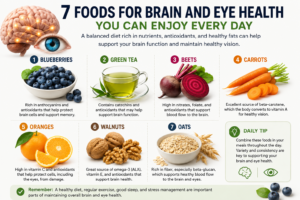
Instead of looking for one “superfood,” I think it is more useful to build meals around a variety of nutrient-rich foods. Here are seven foods that can be easy to include in your everyday diet.
In this article, we’ll look at 7 foods for brain and eye health that you can easily include in your daily meals.
1. Spinach
Spinach is one of the easiest foods to add to a diet focused on eye health. It contains lutein and zeaxanthin, two carotenoids found in the retina of the eye.
These compounds are often studied for their relationship to eye health, particularly the macula, an area of the retina responsible for detailed central vision.
Spinach is also a good source of folate, vitamin C, vitamin K, and other nutrients.
You don’t have to eat a large bowl of raw spinach every day. Try adding a handful to scrambled eggs, soups, sandwiches, or smoothies.
Simple idea: Sauté spinach with eggs in the morning for an easy nutrient-rich breakfast.
2. Kale
Kale is another leafy green vegetable that provides lutein and zeaxanthin.
One reason I like leafy greens is that they are easy to use in different meals. You can add kale to a salad, soup, grain bowl, or smoothie without having to completely change your usual diet.
Kale also provides fiber and several vitamins and minerals.
Eating kale does not mean you are guaranteed to have perfect eyesight as you get older. However, regularly eating a variety of vegetables can help you get important nutrients as part of an overall healthy eating pattern.
Try this: Add chopped kale to a salad with olive oil, beans, tomatoes, and a source of protein.
3. Salmon
When it comes to omega-3 fatty acids, salmon is one of the most practical foods to consider.
Fatty fish such as salmon provide EPA and DHA, two long-chain omega-3 fatty acids. DHA is particularly important in the structure and function of the brain and is also found in the retina.
Salmon also provides high-quality protein and several other nutrients.
You don’t need to eat salmon every day to benefit from including fish in your diet. If you enjoy it, you can use it as part of a weekly meal rotation.
Simple meal: Baked salmon with roasted vegetables and a small serving of whole grains makes an easy balanced dinner.
4. Eggs
Eggs are an affordable and convenient source of several nutrients, including lutein and zeaxanthin.
Interestingly, the body may absorb the lutein and zeaxanthin in eggs relatively well because these carotenoids are accompanied by fat in the yolk. This is one reason eggs can fit nicely into a nutrient-rich breakfast.
Eggs also provide protein, choline, vitamin B12, and other nutrients.
Choline is important for normal brain function and plays a role in the production of acetylcholine, a neurotransmitter involved in memory and other functions.
Of course, an egg isn’t a magic food for the brain. Think of it as one useful food within a varied diet.
My favorite simple option: eggs with spinach and tomatoes. It takes only a few minutes and combines protein with vegetables.
5. Walnuts
Walnuts are a convenient plant-based source of alpha-linolenic acid (ALA), an omega-3 fatty acid.
They also provide protein, fiber, unsaturated fats, and other plant compounds.
I like walnuts because they don’t require any preparation. A small handful can be added to oatmeal, yogurt, salads, or fruit.
It’s worth remembering that ALA is different from the EPA and DHA found in fatty fish. The body can convert some ALA into EPA and DHA, but the conversion is limited.
So walnuts are a useful part of a healthy diet, but they aren’t nutritionally identical to salmon or other fatty fish.
6. Broccoli
Broccoli may not be the first food people think of when they hear “brain and eye health,” but it can be a valuable addition to your diet.
It provides lutein along with vitamin C, vitamin K, folate, and fiber.
Broccoli also contains a variety of plant compounds that are being studied for their potential health effects.
The bigger picture matters here. You don’t need to find a food that contains every nutrient associated with eye or brain health. Eating different vegetables throughout the week gives you a broader range of nutrients.
Easy idea: Roast broccoli with olive oil, garlic, and a little black pepper and serve it alongside salmon or chicken.
7. Chia Seeds
Chia seeds are another plant source of ALA omega-3 fatty acids.
They are also rich in fiber and provide minerals such as calcium and magnesium.
A simple way to use chia seeds is to stir them into oatmeal, yogurt, or a smoothie. You can also make chia pudding by combining them with milk or a milk alternative and allowing the mixture to thicken.
Because chia seeds contain a lot of fiber, it is a good idea to increase your intake gradually if you are not used to eating high-fiber foods.
Easy breakfast: Greek yogurt, berries, chia seeds, and a few walnuts make a simple combination of protein, fiber, healthy fats, and plant foods.
Why Lutein Matters for Eye Health
Lutein is a naturally occurring carotenoid found in certain fruits and vegetables. It is particularly concentrated in the retina.
Another related carotenoid, zeaxanthin, is also found in the eye.
Foods such as spinach, kale, broccoli, and eggs can contribute lutein to the diet.
However, it is important not to turn this into a promise that eating more lutein will automatically prevent vision problems. Eye health depends on many factors, including age, genetics, lifestyle, existing health conditions, and overall nutrition.
A better approach is to regularly include colorful vegetables and other nutrient-rich foods.
Why Omega-3s Matter for the Brain
Omega-3 fatty acids are a family of fats with different forms and functions.
DHA is an important structural component of the brain and retina, while EPA also plays important roles in the body.
Fatty fish such as salmon are direct dietary sources of EPA and DHA. Plant foods such as walnuts and chia seeds provide ALA.
Because these omega-3 forms are not exactly interchangeable, eating a variety of foods can be helpful.
If you don’t eat fish, plant sources such as walnuts and chia seeds can still provide ALA as part of a balanced diet.
Do You Need to Eat All 7 Foods Every Day?
No.
The title of this article is about foods you can eat regularly, not foods you must eat every single day.
Trying to eat seven specific foods every day can make healthy eating feel unnecessarily complicated.
Instead, think about variety.
You might have:
- Eggs and spinach for breakfast
- A handful of walnuts with fruit as a snack
- A kale and bean salad for lunch
- Salmon and broccoli for dinner
- Chia seeds added to yogurt or oatmeal
On another day, you can choose different vegetables, beans, fish, nuts, or seeds.
Variety is more important than perfection.
A Simple Eye- and Brain-Friendly Meal Idea
One of my favorite ways to make healthy eating easier is to combine several nutrient-rich foods in one meal instead of thinking about each nutrient separately.
For example:
Breakfast:
Eggs + spinach + whole-grain toast + fruit
Lunch:
Kale salad + beans + vegetables + olive oil
Snack:
Greek yogurt + chia seeds + berries
Dinner:
Salmon + roasted broccoli + brown rice
This kind of meal pattern provides a mixture of protein, fiber, healthy fats, vitamins, minerals, and plant compounds.
You don’t need expensive powders or special “brain foods” to create a nutritious meal.
My Experience With Adding These Foods to My Meals
I’ve found that making healthy eating simple is much easier than trying to follow a complicated diet.
I like adding vegetables such as spinach and broccoli to meals because they are easy to prepare. I also enjoy having eggs in the morning and adding walnuts or chia seeds to yogurt or oatmeal.
What works best for me is not trying to eat perfectly every day. Instead, I try to include a vegetable, a protein source, and a healthy source of fat in my meals whenever I can.
I also remind myself that one meal isn’t going to transform my health. It’s the habits I repeat over time that matter most.
That mindset makes healthy eating feel more realistic and sustainable.
Other Habits That Support Eye and Brain Health
Food is only one part of the picture.
Regular physical activity, adequate sleep, not smoking, managing blood pressure and blood sugar, and keeping up with recommended medical and eye care can also be important for long-term health.
If you already have an eye condition or another health condition, don’t rely on food alone as a treatment. Talk with a qualified healthcare professional about your individual needs.
Frequently Asked Questions
What foods are highest in lutein?
Leafy green vegetables such as spinach and kale are good dietary sources of lutein. Other foods, including broccoli and egg yolks, can also contribute lutein to the diet.
Which foods are high in omega-3 fatty acids?
Fatty fish such as salmon are good sources of EPA and DHA. Walnuts and chia seeds provide the plant-based omega-3 fatty acid ALA.
Can lutein improve eyesight?
Lutein is an important carotenoid found in the retina, but eating lutein-rich foods should not be described as a way to restore or dramatically improve eyesight. A healthy diet can support normal eye health as part of an overall healthy lifestyle.
Are eggs good for brain and eye health?
Eggs provide several nutrients, including lutein, zeaxanthin, choline, and protein. They can be part of a balanced diet that supports overall nutrition.
Do I need supplements for eye and brain health?
Not necessarily. Many nutrients can be obtained through a varied diet. Whether a supplement is appropriate depends on your diet, health, medications, and nutritional needs. Talk with a healthcare professional before starting a supplement specifically for eye or brain health.
Can these foods prevent dementia or eye disease?
No single food can guarantee prevention of dementia or eye disease. A balanced diet may contribute to overall health, but many factors influence the risk of chronic conditions.
Final Thoughts
There is no single food that can protect your eyes or keep your brain healthy forever. What matters more is the overall pattern of your diet and lifestyle.
Foods such as spinach, kale, salmon, eggs, walnuts, broccoli, and chia seeds can provide nutrients including lutein, zeaxanthin, omega-3 fatty acids, protein, fiber, vitamins, and minerals.
You don’t have to eat all seven foods every day. Start with one or two that you enjoy and find easy to prepare. Then gradually add more variety to your meals.
For me, that is what makes healthy eating sustainable. Small choices repeated regularly are much easier to maintain than trying to completely change your diet overnight.
References
For a health article like this, use reliable sources such as:
- National Institutes of Health (NIH)
- National Eye Institute (NEI)
- Office of Dietary Supplements (ODS)
- National Institute on Aging (NIA)
- U.S. Department of Agriculture (USDA)
This article is for general informational purposes only and is not intended to diagnose, theat, or prevent any disease. Individual nutritional needs vary. If you have a medical condition or specific dietary concerns, consult a qualified healthcare professional.