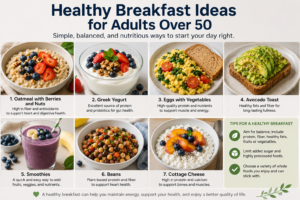
As we get older, eating a good breakfast can become more important—not because breakfast has to be perfect, but because it is an easy opportunity to give your body protein, fiber, healthy fats, vitamins, and minerals.
For adults over 50, getting enough protein throughout the day can be especially useful for maintaining muscle and supporting overall health. However, a high-protein breakfast doesn’t have to mean eating a large steak or drinking a complicated protein shake.
Simple foods such as eggs, Greek yogurt, cottage cheese, oatmeal, salmon, nuts, and seeds can make a nutritious breakfast without requiring much preparation.
I also think breakfast is easier to maintain when it fits naturally into your everyday life. You don’t need to completely change what you eat. Adding a little more protein to a breakfast you already enjoy can be a good place to start.
My Experience With Eating More Protein at Breakfast
I’ve learned that I don’t need an elaborate breakfast to make a healthier choice.
When I have eggs with vegetables in the morning, or Greek yogurt with fruit and nuts, I feel like I have started the day with a more balanced meal.
I also noticed that planning breakfast the night before makes a big difference. If I already have boiled eggs, washed berries, or cooked vegetables ready in the refrigerator, I’m much less likely to reach for something highly processed when I’m in a hurry.
I don’t try to eat the exact same breakfast every day. Sometimes I have eggs, and other mornings I choose yogurt or oatmeal.
For me, the most important thing is finding simple meals that I actually enjoy and can continue making regularly.
Healthy aging isn’t about following a perfect diet. It’s about building habits that are realistic enough to keep doing.
Why Protein Matters After 50
Protein is one of the nutrients your body needs to maintain and repair tissues. It is also important for muscles, bones, enzymes, hormones, and many other normal body functions.
As people get older, maintaining muscle becomes an increasingly important part of healthy aging. Regular physical activity, especially resistance exercise, combined with adequate nutrition can help support muscle health.
This doesn’t mean that everyone over 50 needs to eat a huge amount of protein at breakfast. Your individual protein needs depend on factors such as body size, activity level, overall diet, and health.
Instead of focusing on one “perfect” number, think about spreading nutritious protein sources across your meals.
Here are seven high-protein breakfast ideas for adults over 50 that are simple, nutritious, and easy to adapt.