7 High-Protein Breakfasts for Adults 50+

As we get older, eating a good breakfast can become more important—not because breakfast has to be perfect, but because it is an easy opportunity to give your body protein, fiber, healthy fats, vitamins, and minerals.

For adults over 50, getting enough protein throughout the day can be especially useful for maintaining muscle and supporting overall health. However, a high-protein breakfast doesn’t have to mean eating a large steak or drinking a complicated protein shake.

Simple foods such as eggs, Greek yogurt, cottage cheese, oatmeal, salmon, nuts, and seeds can make a nutritious breakfast without requiring much preparation.

I also think breakfast is easier to maintain when it fits naturally into your everyday life. You don’t need to completely change what you eat. Adding a little more protein to a breakfast you already enjoy can be a good place to start.

My Experience With Eating More Protein at Breakfast

I’ve learned that I don’t need an elaborate breakfast to make a healthier choice.

When I have eggs with vegetables in the morning, or Greek yogurt with fruit and nuts, I feel like I have started the day with a more balanced meal.

I also noticed that planning breakfast the night before makes a big difference. If I already have boiled eggs, washed berries, or cooked vegetables ready in the refrigerator, I’m much less likely to reach for something highly processed when I’m in a hurry.

I don’t try to eat the exact same breakfast every day. Sometimes I have eggs, and other mornings I choose yogurt or oatmeal.

For me, the most important thing is finding simple meals that I actually enjoy and can continue making regularly.

Healthy aging isn’t about following a perfect diet. It’s about building habits that are realistic enough to keep doing.

Why Protein Matters After 50

Protein is one of the nutrients your body needs to maintain and repair tissues. It is also important for muscles, bones, enzymes, hormones, and many other normal body functions.

As people get older, maintaining muscle becomes an increasingly important part of healthy aging. Regular physical activity, especially resistance exercise, combined with adequate nutrition can help support muscle health.

This doesn’t mean that everyone over 50 needs to eat a huge amount of protein at breakfast. Your individual protein needs depend on factors such as body size, activity level, overall diet, and health.

Instead of focusing on one “perfect” number, think about spreading nutritious protein sources across your meals.

Here are seven high-protein breakfast ideas for adults over 50 that are simple, nutritious, and easy to adapt.
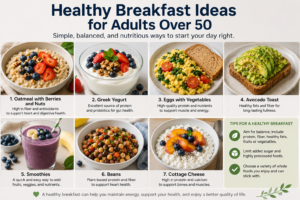
1. Eggs With Spinach and Whole-Grain Toast

Eggs are one of the easiest high-protein foods to include in breakfast.

One large egg provides roughly 6 grams of protein, along with nutrients such as choline, vitamin B12, selenium, and other vitamins and minerals.

I like eggs because they are inexpensive, quick to prepare, and easy to combine with vegetables.

Try making two eggs with sautéed spinach and serving them with a slice of whole-grain toast. You get protein from the eggs, fiber from the whole grains and vegetables, and additional nutrients from the spinach.

You can also add tomatoes, mushrooms, onions, or peppers depending on what you have in the refrigerator.

Simple breakfast idea

2 eggs + spinach + whole-grain toast + fresh fruit

This combination provides protein, fiber, and other nutrients in one simple breakfast.


2. Greek Yogurt With Berries, Walnuts, and Chia Seeds

Greek yogurt is another convenient way to increase protein at breakfast.

Depending on the brand and serving size, Greek yogurt can provide considerably more protein than regular yogurt.

Choose plain Greek yogurt when possible and add your own fruit rather than choosing a variety with a large amount of added sugar.

Top it with berries, walnuts, and chia seeds.

Berries provide fiber and plant compounds, while walnuts and chia seeds provide healthy fats and other nutrients.

Try this combination:

Plain Greek yogurt + blueberries + walnuts + chia seeds

If you prefer a sweeter taste, a small amount of fruit can add natural sweetness without needing a lot of added sugar.


3. Protein-Rich Oatmeal

Oatmeal is a popular breakfast for good reason. It is easy to prepare, inexpensive, and provides carbohydrates and fiber.

However, plain oatmeal by itself may not provide as much protein as some people need from a meal.

A simple solution is to add a protein-rich food.

You could prepare oatmeal with milk instead of water and add Greek yogurt after cooking. Chia seeds, walnuts, or peanut butter can also add protein and healthy fats.

For example:

Oatmeal + milk + Greek yogurt + berries + chia seeds

This combination gives you a mixture of protein, fiber, and carbohydrates.

It can also make oatmeal more filling and balanced than eating oatmeal with a large amount of added sugar.

4. Cottage Cheese With Fruit and Nuts

Cottage cheese is another easy breakfast option that is often overlooked.

It is naturally rich in protein and can be paired with either sweet or savory ingredients.

For a quick breakfast, add berries, sliced peaches, or another favorite fruit. Then sprinkle a small amount of walnuts or almonds on top.

If you prefer savory foods, try cottage cheese with tomatoes, cucumber, black pepper, and whole-grain toast.

Two easy combinations:

Sweet:
Cottage cheese + berries + walnuts

Savory:
Cottage cheese + tomatoes + cucumber + whole-grain toast

This makes cottage cheese especially useful when you don’t have much time to cook in the morning.


5. Avocado Toast With Eggs

Avocado toast can become a more balanced high-protein breakfast with one simple addition: eggs.

Avocados provide mostly unsaturated fat and fiber, while eggs provide protein and several important nutrients.

Spread mashed avocado on whole-grain toast and top it with a boiled, poached, or scrambled egg.

You can add tomatoes or leafy greens for more vegetables.

A simple plate:

Whole-grain toast + avocado + 1–2 eggs + tomatoes

The combination of protein, fiber, and healthy fats can make this a satisfying breakfast.

Just remember that avocado is nutritious but relatively calorie-dense, so portion size can still matter depending on your individual goals.


6. Salmon and Egg Breakfast Bowl

If you enjoy savory breakfasts, salmon can be an excellent option.

Salmon provides high-quality protein as well as omega-3 fatty acids, including EPA and DHA.

You don’t have to cook fresh salmon specifically for breakfast. Leftover cooked salmon from dinner can make the next morning’s meal much easier.

Try combining:

  • Cooked salmon
  • Scrambled eggs
  • Spinach
  • Avocado
  • A small serving of brown rice or whole grains

This creates a filling breakfast with protein, healthy fats, vegetables, and carbohydrates.

It is also a good example of how leftovers can make healthy eating easier. Preparing extra salmon at dinner means you already have part of breakfast ready for the next day.


7. Bean and Egg Breakfast Bowl

Beans and eggs can make a simple, protein-rich breakfast when you want something savory and filling.

Beans provide plant-based protein and fiber, while eggs add protein and nutrients such as choline and vitamin B12.

You can use black beans, kidney beans, or another type of cooked bean you enjoy. Add a couple of eggs and some vegetables such as spinach, tomatoes, or peppers.

For a simple breakfast bowl, try:

½ cup beans + 2 eggs + spinach + tomatoes + avocado

You can also add a small serving of whole-grain toast if you want some additional carbohydrates.

This combination brings together protein, fiber, vegetables, and healthy fats in one simple breakfast.

If you use canned beans, look for lower-sodium options or rinse and drain them before eating.

Common Breakfast Mistakes to Avoid After 50

A healthy breakfast is not only about adding more protein. The foods you choose and how you combine them can also make a difference.

Eating a Breakfast With Very Little Protein

A breakfast made mostly of toast, cereal, or fruit may not provide much protein.

You can make a simple change by adding eggs, Greek yogurt, cottage cheese, milk, nuts, seeds, or another protein-rich food.

Choosing Too Many Sugary Foods

Pastries, sweetened cereals, flavored yogurts, and sugary breakfast drinks can add a lot of added sugar to your morning meal.

You don’t have to avoid these foods completely. However, choosing whole or minimally processed foods more often can make your breakfast more nutritious.

Forgetting About Fiber

Protein is important, but fiber is important too.

Oatmeal, berries, vegetables, whole grains, nuts, seeds, and beans can help add fiber to your diet.

Try combining protein with a fiber-rich food instead of focusing on protein alone.

Making Breakfast Too Complicated

A healthy breakfast doesn’t have to involve complicated recipes or expensive ingredients.

If a breakfast takes too long to prepare, you may find it difficult to maintain the habit.

Simple meals such as eggs and whole-grain toast or Greek yogurt with berries can be just as practical for a busy morning.

My simple combination

Greek yogurt + chia seeds + berries + walnuts + oats

This is one of the easiest options for mornings when you don’t feel like cooking.


How Much Protein Should You Have at Breakfast?

There isn’t one breakfast protein target that is right for every adult over 50.

Your needs depend on your overall health, body size, physical activity, and total daily diet.

Instead of worrying about hitting an exact number at every breakfast, consider whether your meal contains a meaningful source of protein.

For example:

  • Eggs
  • Greek yogurt
  • Cottage cheese
  • Milk
  • Salmon
  • Beans
  • Nuts and seeds

You can then include protein at lunch and dinner as well.

The overall pattern of your diet matters more than making one meal perfect.

If you have kidney disease or another medical condition that affects protein intake, ask your healthcare professional about an appropriate amount for you.


How to Make Your Breakfast More Balanced

A high-protein breakfast doesn’t mean you should eat protein alone.

A balanced breakfast can include:

Protein + fiber-rich carbohydrates + healthy fats + fruits or vegetables

For example:

Eggs + whole-grain toast + spinach + berries  or

Greek yogurt + oats + berries + walnuts

This approach gives your body a wider variety of nutrients and can make breakfast more satisfying.

I find that meals are easier to stick with when they are simple enough to prepare on a normal weekday.


Simple Breakfast Swaps for Adults Over 50

Small changes can make a familiar breakfast more nutritious.

Instead of:

Sugary cereal → Choose oatmeal with berries and Greek yogurt.

Toast with jam → Add an egg and avocado.

Sweetened yogurt → Choose plain Greek yogurt and add fresh fruit.

Pastry → Try eggs with whole-grain toast and fruit.

Sugary breakfast drink → Choose water, milk, or an unsweetened beverage.

You don’t have to eliminate every food you enjoy. The goal is simply to make nutritious choices more often.


Other Habits That Support Healthy Aging

Breakfast is only one part of healthy aging.

Eating nutritious foods works best when combined with other healthy habits, such as regular physical activity, adequate sleep, maintaining social connections, and avoiding smoking.

Strength training or other resistance exercises can be particularly useful for maintaining muscle as you age.

Walking, stretching, balance exercises, and other activities can also be incorporated into a regular routine.

Think of nutrition as one piece of a much larger picture.


Frequently Asked Questions

Why is protein important for adults over 50?

Protein helps maintain and repair body tissues and supports muscle health. Getting adequate protein as part of a balanced diet can be especially important as people age.

What is a good high-protein breakfast for someone over 50?

Eggs with vegetables and whole-grain toast, Greek yogurt with berries and nuts, cottage cheese with fruit, and oatmeal combined with Greek yogurt are all practical choices.

Are eggs a good breakfast food after 50?

Yes. Eggs provide protein and several nutrients, including choline, vitamin B12, and selenium. They can be part of a balanced diet for adults over 50.

Is Greek yogurt high in protein?

Many Greek yogurts are relatively high in protein, although the amount varies by brand and serving size. Check the Nutrition Facts label to compare products.

Can oatmeal be a high-protein breakfast?

Yes. Oatmeal can become a higher-protein meal when combined with milk, Greek yogurt, nuts, seeds, or other protein-rich foods.

Do adults over 50 need protein supplements?

Not necessarily. Many people can obtain adequate protein from regular foods. Protein supplements may be useful in some situations, but individual needs vary. If you’re considering a supplement, discuss it with a healthcare professional.


Final Thoughts

A healthy breakfast for adults over 50 doesn’t have to be complicated.

Adding a good source of protein to your morning meal can be a practical way to support a balanced diet and help maintain muscle as part of healthy aging. Eggs, Greek yogurt, cottage cheese, salmon, nuts, seeds, and other whole foods can all fit into a nutritious breakfast.

You don’t need to eat all seven breakfast ideas every week. Choose the foods you enjoy and rotate them so your meals don’t become boring.

For me, healthy eating became much easier when I stopped looking for a perfect meal and started focusing on small choices I could repeat.

A nutritious breakfast isn’t about being perfect. It’s about giving your body a good start and building eating habits you can maintain for years to come.


References

For the final published article, use the actual sources you consulted, preferably authoritative sources such as:

  • National Institute on Aging (NIA)
  • National Institutes of Health (NIH)
  • USDA FoodData Central
  • Academy of Nutrition and Dietetics
  • Harvard T.H. Chan School of Public Health

Individual nutritional needs can vary, especially for people taking medications or managing health conditions. If you have specific dietary needs, talk with your doctor or a registered dietitian before making major changes to your diet.

Leave a Comment