A fasting blood sugar level of 110 mg/dL is above the normal range. According to the American Diabetes Association, a fasting plasma glucose level below 100 mg/dL is considered normal, while 100–125 mg/dL falls within the prediabetes range.
However, one home blood sugar reading does not diagnose prediabetes or diabetes. Home glucose meters can be useful for monitoring patterns, but diagnosis is generally based on appropriate testing in a healthcare setting.
If your fasting blood sugar is repeatedly around 110 mg/dL, it may be worth discussing your results with a healthcare professional and asking whether an A1C or laboratory fasting glucose test is appropriate.
The good news is that prediabetes does not automatically mean that type 2 diabetes will develop. Lifestyle changes such as healthier eating, regular physical activity, and maintaining a healthy weight when appropriate can help reduce the risk of progressing to type 2 diabetes.
What Does a Fasting Blood Sugar of 110 Mean?
A fasting blood sugar of 110 mg/dL falls within the prediabetes range when measured as a fasting plasma glucose test.
Prediabetes means that blood glucose is higher than normal but not high enough to meet the diagnostic range for diabetes. It is a warning sign that deserves attention, but it does not mean that diabetes is inevitable.
An A1C test provides another way to evaluate blood sugar. The A1C reflects average blood glucose over approximately the previous two to three months.
According to the American Diabetes Association:
- Normal A1C: below 5.7%
- Prediabetes: 5.7%–6.4%
- Diabetes: 6.5% or higher
For fasting plasma glucose:
- Normal: below 100 mg/dL
- Prediabetes: 100–125 mg/dL
- Diabetes: 126 mg/dL or higher
A fasting glucose result of 110 mg/dL therefore deserves attention, but it should be viewed as part of a larger picture rather than as a diagnosis by itself.
Fasting Blood Sugar Levels by Range
A fasting plasma glucose test is generally performed after at least 8 hours without food or caloric drinks. Water is generally allowed during the fasting period.
| Category | Fasting Plasma Glucose | A1C |
|---|---|---|
| Normal | Below 100 mg/dL | Below 5.7% |
| Prediabetes | 100–125 mg/dL | 5.7%–6.4% |
| Diabetes | 126 mg/dL or higher | 6.5% or higher |
These ranges are used for clinical evaluation and should not be interpreted as a diagnosis from a single home glucose reading.
What Does 110 mg/dL Mean?
A fasting glucose of 110 mg/dL is within the prediabetes range if confirmed by an appropriate fasting plasma glucose test.
It does not mean that you have diabetes.
If you repeatedly see readings around this level, keeping a record of your fasting readings and discussing the pattern with a healthcare professional can be more useful than focusing on one number.
Why Can Blood Sugar Be Higher in the Morning?
Morning blood sugar can be affected by several factors. Food from the previous evening is not necessarily the only explanation.
The Dawn Phenomenon
Hormones that help the body prepare for waking can increase glucose availability in the early morning. For some people, this may contribute to higher blood sugar after waking.
The effect can vary from person to person, particularly when insulin sensitivity is reduced.
Overnight Glucose Production
The liver naturally releases glucose during periods without food because the body still needs energy while you sleep.
When insulin does not work as effectively, the balance between glucose production and glucose use can change. This may contribute to higher fasting glucose.
Sleep and Stress
Poor sleep and ongoing stress can affect hormones and insulin sensitivity.
Rather than focusing on one specific number of hours of sleep, aim for a consistent sleep schedule and enough sleep for your individual needs.
If you regularly wake up tired, snore heavily, or have other symptoms that suggest a sleep problem, discussing them with a healthcare professional may be worthwhile.
Evening Meals and Late-Night Eating
The size and timing of your evening meal may also affect overnight glucose patterns.
A very large meal close to bedtime may make it harder to understand why your morning reading is elevated.
Instead of following a strict eating schedule, focus on a consistent routine that works for your health needs.
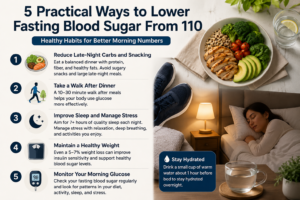
3 Practical Habits That May Support Better Morning Blood Sugar
There is no single food or habit that guarantees a fasting glucose level in a particular range.
Instead, several everyday habits can work together to support overall blood sugar management.
1. Build Regular Physical Activity Into Your Day
Physical activity helps muscles use glucose for energy and is an important part of blood sugar management.
You do not need an intense workout every morning. Walking, resistance exercises, bodyweight movements, and other moderate activities can all contribute to a more active lifestyle.
For simple morning movement ideas, see 6 Simple Morning Movements for Healthy Blood Sugar.
The CDC recommends working toward at least 150 minutes of moderate-intensity physical activity per week for people who are able to do so. Starting gradually can make the habit easier to maintain.
2. Pay Attention to Evening Eating Habits
Instead of focusing on a specific “perfect” dinner time, try to avoid frequent overeating late at night.
A balanced dinner can include vegetables, a protein source, a high-fiber carbohydrate, and a healthy fat source.
For some people, reducing frequent late-night snacks may make it easier to maintain a consistent eating pattern.
There is no need to follow a long fasting period unless it is appropriate for your individual health situation.
3. Make Sleep and Stress Management Part of Your Routine
Sleep and stress are often overlooked when people focus only on food.
A consistent sleep schedule, regular physical activity, and simple stress-management habits can support overall health.
If you have persistent sleep problems or significant stress, talk with a healthcare professional rather than assuming that your morning glucose is caused by diet alone.
Does Walking After Meals Help Blood Sugar?
Walking after a meal can be a simple way to add physical activity to your day.
The CDC suggests starting with a 10-minute walk after dinner as one practical way to become more active.
The goal does not have to be a long workout.
A short walk after a meal can be easier to maintain than waiting for the perfect time for a longer exercise session.
For more ideas, see 6 Simple 10-Minute Movements After Meals.
What Should You Eat If Your Fasting Blood Sugar Is 110?
There is no single “best food” that automatically lowers fasting blood sugar.
Instead, focus on an overall eating pattern that includes a variety of nutritious foods.
Useful choices can include:
- Non-starchy vegetables
- Beans and lentils
- Oats and other high-fiber whole grains
- Plain Greek yogurt
- Nuts and seeds
- Eggs and other protein foods
- Whole fruits
- Fish, poultry, tofu, or other protein sources
Pairing carbohydrates with protein, fiber, or healthy fats can also make meals more balanced.
For example, instead of eating fruit alone, you might pair it with plain Greek yogurt or a small serving of nuts.
The goal is not to eliminate carbohydrates completely. It is to build meals that are satisfying and nutritionally balanced.
Can Drinking More Water Lower Fasting Blood Sugar?
Staying hydrated is important for overall health, but drinking extra water should not be viewed as a treatment for high fasting blood sugar.
There is also no good reason to believe that drinking warm water before bed prevents your blood from becoming “thick” during sleep.
Instead, drink fluids regularly according to your thirst, activity level, environment, and individual health needs.
If you have been advised to restrict fluids because of a medical condition, follow your healthcare professional’s advice.
Should You Check Your Blood Sugar Every Morning?
For people who use a home glucose meter, checking at the same general time and under similar conditions can make patterns easier to understand.
However, not everyone with a fasting glucose around 110 mg/dL needs to check their blood sugar every morning.
Your healthcare professional can help determine whether home monitoring is useful for you.
If you do monitor your glucose, consider recording:
- Fasting glucose
- Time of the reading
- Dinner time
- Late-night snacks
- Sleep duration
- Physical activity
- Stress or illness
Looking at several readings over time can provide more useful information than focusing on one unusually high or low result.
When Should You Talk to a Doctor?
If your fasting blood sugar is repeatedly 100–125 mg/dL, consider discussing the results with a healthcare professional.
You can ask whether an A1C test or laboratory fasting plasma glucose test would be appropriate.
A fasting plasma glucose of 126 mg/dL or higher is within the diabetes diagnostic range, but diagnosis generally requires appropriate testing and confirmation rather than relying on a single home reading.
You should also discuss your results if:
- Your fasting readings continue to increase.
- You frequently have unusually high glucose readings.
- You have symptoms of high blood sugar.
- You have risk factors for type 2 diabetes.
- You are taking medications that can affect blood glucose.
- You are unsure how to interpret your home glucose readings.
Do not change or stop prescribed medication based only on home blood sugar readings.
Can Prediabetes Improve?
Prediabetes does not automatically progress to type 2 diabetes.
The CDC reports that lifestyle changes can help prevent or delay type 2 diabetes in people with prediabetes. These changes can include healthier eating, increased physical activity, and modest weight loss when appropriate.
The important point is that improvement usually comes from consistent habits rather than one special food, drink, or supplement.
Small changes that you can maintain over time may be more realistic than trying a restrictive diet for a short period.
A Simple Morning Routine for Better Blood Sugar Habits
If your fasting glucose is around 110 mg/dL, your morning does not need to become complicated.
A simple routine could look like this:
Wake up → drink water → do 5–10 minutes of gentle movement → prepare a balanced breakfast
For breakfast, you might choose foods such as:
- Plain Greek yogurt with berries and nuts
- Oatmeal with berries and ground flaxseed
- Eggs with vegetables and whole-grain toast
- Plain yogurt with fruit and seeds
The exact foods can vary according to your preferences and health needs.
The goal is to create a routine that is realistic enough to repeat.
Frequently Asked Questions
Is 110 fasting blood sugar dangerous?
A fasting glucose of 110 mg/dL is within the prediabetes range when confirmed by an appropriate fasting plasma glucose test. It is not in the diabetes diagnostic range, but repeated elevated results deserve attention and follow-up.
Can I have diabetes with a fasting blood sugar of 110?
A fasting glucose of 110 mg/dL alone does not meet the diabetes diagnostic threshold. However, other test results, such as an A1C or oral glucose tolerance test, can provide additional information.
Can fasting blood sugar return to the normal range?
For some people with prediabetes, blood glucose can return to the normal range with lifestyle changes. However, individual results vary, so it is better to focus on sustainable habits rather than trying to reach a specific number quickly.
Should I stop eating carbohydrates?
Not necessarily.
Carbohydrates are found in many nutritious foods, including fruits, beans, whole grains, and vegetables. Instead of eliminating carbohydrates completely, focus on portions, food quality, fiber, and balanced meals.
Does walking help blood sugar?
Regular physical activity can help with blood sugar management. Even a short walk can be a practical way to add movement to your day.
Does stress raise blood sugar?
Stress can affect hormones and blood glucose, although the effect varies from person to person. Managing stress is therefore one part of an overall healthy lifestyle.
Final Thoughts
A fasting blood sugar of 110 mg/dL is within the prediabetes range when confirmed by an appropriate fasting plasma glucose test. It does not mean that diabetes is inevitable, and one home glucose reading cannot diagnose diabetes or prediabetes.
If your readings are repeatedly elevated, consider discussing them with a healthcare professional and asking whether an A1C or laboratory fasting glucose test would be appropriate.
In the meantime, focus on practical habits that support overall health: eat balanced meals, include more high-fiber foods, stay physically active, avoid frequent late-night overeating, get adequate sleep, and maintain a healthy weight when appropriate.
There is no need to search for one “blood sugar-lowering” food or a quick fix.
For me, the most useful approach is to think about the whole routine: what I eat, when I move, how I sleep, and what habits I can realistically maintain every day.
Small, consistent choices can add up over time.
Sources
- Centers for Disease Control and Prevention (CDC).
Important: This article is for general educational purposes only. It is not a substitute for medical diagnosis, treatment, or individualized medical advice. If you have concerns about your blood sugar or diabetes risk, speak with a qualified healthcare professional.
4 thoughts on “Fasting Blood Sugar of 110: What Does It Mean?”