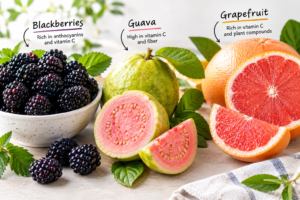
When I want to add more nutritious foods to my diet, fruit is one of the easiest choices. Fruit is naturally flavorful, refreshing, and simple to include in breakfast or as a snack.
Among the many fruits available, blackberries, guava, and grapefruit are three interesting choices because they provide vitamins, fiber, and naturally occurring plant compounds.
Antioxidants are substances that help protect cells from oxidative stress. Our bodies naturally produce free radicals during normal metabolic processes, while factors such as smoking, excessive alcohol consumption, air pollution, and an unbalanced diet can contribute to oxidative stress.
Eating antioxidant-rich fruit does not eliminate oxidative stress or guarantee protection from disease. However, regularly eating a variety of fruits and vegetables can be part of an overall balanced eating pattern.
Each of these three fruits also has something different to offer. Blackberries are known for their dark color and anthocyanins, guava is especially rich in vitamin C and provides fiber, and grapefruit provides vitamin C along with other naturally occurring plant compounds.
What Makes These Fruits Antioxidant-Rich?
Plants produce many compounds that help protect them from environmental stress. When we eat plant foods, we consume some of these naturally occurring compounds as well.
Blackberries, guava, and grapefruit contain different combinations of vitamins and phytochemicals.
This is one reason why eating a variety of colorful fruits can be more useful than concentrating on a single “superfood.”
Instead of trying to find one perfect fruit, it is better to include a variety of fruits throughout the week.
1. Blackberries: A Dark-Colored Berry Rich in Anthocyanins
Blackberries are small, but their deep purple-black color makes them especially interesting from a nutritional perspective.
Their dark color comes partly from anthocyanins, a type of flavonoid plant compound with antioxidant properties.
Blackberries also provide dietary fiber and vitamin C.
Fiber can help support normal digestion and contribute to fullness, while vitamin C plays several important roles in normal body function, including supporting the immune system and collagen production.
Easy Ways to Eat Blackberries
Blackberries require very little preparation, which makes them convenient for everyday eating.
You can add them to:
- Plain Greek yogurt
- Oatmeal
- Whole-grain cereal
- Chia pudding
- Smoothies
- Cottage cheese
- A simple fruit bowl
Fresh berries are delicious, but frozen blackberries can also be convenient. Frozen fruit can be especially useful when fresh berries are unavailable or when you want to keep fruit on hand for a quick breakfast.
There is usually no need to add extra sugar. Blackberries already have natural sweetness and a strong flavor.
2. Guava: A Vitamin C-Rich Tropical Fruit
Guava is sometimes overlooked because it is less familiar than apples, oranges, or strawberries, but it deserves a place in a varied fruit rotation.
Guava is particularly notable for its vitamin C content. It also provides dietary fiber and other naturally occurring plant compounds.
Vitamin C functions as an antioxidant in the body and is also needed for collagen production and normal immune function.
The fiber in guava can also make it a satisfying addition to a meal or snack.
How to Enjoy Guava
Guava can be washed thoroughly, sliced, and eaten fresh.
Depending on the variety and personal preference, the skin and edible seeds can also be consumed.
You can add sliced guava to:
- Plain yogurt
- Oatmeal
- Fruit salads
- Smoothies
- Cottage cheese
- A breakfast plate
Guava has a distinctive sweet and slightly floral flavor, so it can be a nice way to add variety when you are tired of eating the same fruits every day.
3. Grapefruit: Tart, Refreshing, and Rich in Vitamin C
Grapefruit has a completely different flavor from blackberries and guava.
Its tart and slightly bitter taste makes it a refreshing fruit, especially when served chilled.
Grapefruit provides vitamin C as well as naturally occurring plant compounds, including flavonoids.
Eating the whole fruit also provides fiber and takes longer to consume than drinking juice.
Whole Grapefruit or Grapefruit Juice?
For everyday eating, whole grapefruit can be a more useful choice than grapefruit juice.
When fruit is turned into juice, it becomes much easier to drink a larger amount quickly. Whole fruit retains its natural structure and fiber, which can make it more satisfying.
This does not mean grapefruit juice is automatically unhealthy. The important factors include portion size and the overall quality of the diet.
If you enjoy grapefruit juice, choosing a reasonable portion and checking the nutrition label for added sugar can be helpful.
Why Eating Different Colors of Fruit Matters
One simple way to improve variety in your diet is to choose fruits with different colors.
Blackberries have deep purple pigments associated with anthocyanins. Guava provides vitamin C and other plant compounds, while grapefruit provides vitamin C and flavonoids.
Different fruits contain different combinations of nutrients and phytochemicals.
That means you do not have to choose between one “best” fruit and all the others.
A better approach is to rotate different fruits throughout the week.
My Simple Approach to Eating Fruit
I find that fruit is easiest to keep in a healthy routine when it does not require much preparation.
Berries can be added to yogurt or oatmeal. Guava can simply be sliced and eaten as a snack. Grapefruit can be served alongside breakfast.
Frozen berries are also convenient to keep available for busy days.
The goal is not to eat enormous amounts of fruit at one time. Instead, choose fruits you genuinely enjoy and find easy to include in your normal meals.
A healthy eating pattern should be realistic enough to maintain.
Pair Fruit With Other Nutritious Foods
Fruit can be even more satisfying when paired with foods that provide protein, healthy fats, or additional fiber.
For example, you can combine fruit with:
- Plain Greek yogurt
- Unsalted nuts
- Seeds
- Oatmeal
- Cottage cheese
- Whole-grain foods
Pairing fruit with another nutritious food can make a snack or breakfast feel more complete.
For people who are watching their blood sugar, this can also be a practical way to avoid eating a large amount of fruit by itself. Individual responses to foods vary, so paying attention to portion size and your overall meal pattern is important.
A Few Things to Know Before Eating These Fruits
Even nutritious foods are not suitable in exactly the same way for everyone.
Grapefruit and Medications
The most important caution with this list is grapefruit.
Grapefruit and grapefruit juice can interact with certain medications and may change how some medicines are absorbed or broken down in the body.
If you take prescription or over-the-counter medication regularly, check the medication information or ask your doctor or pharmacist whether grapefruit is safe for you.
Do not stop or change a medication simply because you want to eat grapefruit. Ask a healthcare professional first.
Sensitive Stomach
Grapefruit is acidic and has a tart flavor. Some people may find acidic fruits uncomfortable, especially when eaten on an empty stomach.
If grapefruit causes stomach discomfort, you can choose another fruit instead.
Raw fruit can also cause digestive discomfort for some people if eaten in large amounts. Start with a comfortable portion and pay attention to how your body responds.
Wash Fresh Fruit
Fresh fruit should be washed thoroughly under running water before eating.
This is particularly important when eating fruit with the skin, such as guava, or when handling fresh berries.
Keeping fruit refrigerated when appropriate and following storage instructions can also help maintain freshness and food safety.
How Much Fruit Should You Eat?
There is no single amount that is perfect for everyone.
Your age, activity level, overall diet, and individual nutritional needs can all affect how much fruit is appropriate.
Instead of focusing on one specific fruit or trying to eat as much as possible, aim for variety and reasonable portions.
Whole fruit is generally a better everyday choice than relying heavily on fruit juice because whole fruit provides fiber and tends to be more filling.
If you are managing a medical condition or have been given specific dietary instructions, follow the recommendations of your healthcare professional.
Why I Prefer Variety Over One “Superfruit”
It is tempting to look for one food that has an unusually powerful health effect.
But healthy eating does not work that way.
Blackberries, guava, and grapefruit each provide different nutrients and plant compounds. Other fruits and vegetables provide still more.
Instead of eating the same fruit every day because it is considered a “superfood,” rotating different fruits can make your diet more varied and enjoyable.
The best healthy foods are often the ones you can realistically continue eating as part of your normal routine.
Simple Ways to Add These Fruits to Your Day
Here are a few easy combinations:
Breakfast:
Plain Greek yogurt + blackberries + a small handful of unsalted nuts
Morning snack:
Sliced guava + plain yogurt
Light breakfast or snack:
Grapefruit + a protein-rich food such as eggs or plain Greek yogurt
Quick option:
Frozen blackberries added to oatmeal or yogurt
These combinations do not require complicated recipes. A few simple ingredients can make a nutritious meal or snack easier to maintain.
The Bottom Line
Blackberries, guava, and grapefruit are three antioxidant-rich fruits that can add color, flavor, vitamins, fiber, and naturally occurring plant compounds to your diet.
Blackberries are especially known for anthocyanins, guava is particularly rich in vitamin C and also provides fiber, and grapefruit provides vitamin C and other plant compounds.
However, no single fruit can prevent cancer, cure disease, or replace medical treatment.
The bigger picture matters more. Eating a variety of fruits and vegetables, choosing mostly minimally processed foods, staying physically active, maintaining a healthy weight, getting adequate sleep, and following recommended health screenings are all part of a healthier lifestyle.
Rather than searching for one perfect “superfruit,” try adding different colorful fruits to your meals throughout the week.
Small, realistic food choices that you can maintain over time can be more valuable than a perfect diet that is difficult to follow.
Disclaimer
This article is for general informational and educational purposes only and is not intended to provide medical advice, diagnose a medical condition, or replace advice from a qualified healthcare professional.
Antioxidant-rich fruits can be part of a balanced diet, but eating blackberries, guava, grapefruit, or any other food does not guarantee protection from cancer or other diseases and should not be considered a treatment or cure.
Grapefruit can interact with certain medications. If you take prescription or over-the-counter medications, ask your doctor or pharmacist whether grapefruit is appropriate for you.
Individual nutritional needs vary. If you have diabetes, kidney disease, digestive problems, food allergies, or another medical condition, follow your healthcare professional’s dietary recommendations.