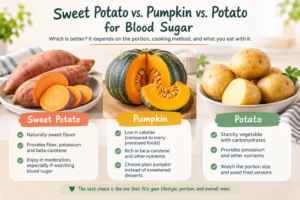
Sweet potatoes, pumpkin, and potatoes can all be part of a healthy diet, but they are not exactly the same when it comes to carbohydrates, calories, portion size, and how they are cooked.
I especially love sweet potatoes. If I could, I would probably eat them more often and in larger portions because I enjoy their natural sweetness so much. But because I pay attention to calories and blood sugar, I try not to overeat them.
For me, the way I cook a sweet potato also matters. I usually steam it rather than bake it. Baked sweet potatoes taste sweeter and more delicious to me, but that is also why I tend to be more careful with the amount I eat.
So which one is better for blood sugar: sweet potato, pumpkin, or regular potato?
The answer depends on the portion, cooking method, and what you eat with it.
Are Sweet Potato, Pumpkin, and Potato Healthy?
All three are nutrient-rich foods, but they are considered starchy vegetables rather than non-starchy vegetables.
Sweet potatoes, potatoes, and pumpkin contain carbohydrates, so they can raise blood sugar after eating. That does not mean you need to avoid them.
The CDC explains that carbohydrates can be part of a healthy diet, but choosing nutritious carbohydrate sources and paying attention to portion size can help with blood sugar management.
The American Diabetes Association also includes potatoes, sweet potatoes, and pumpkin among quality carbohydrate choices that can fit into a balanced meal.
The bigger question is not simply, “Which one has the least sugar?”
It is:
How much are you eating, how is it prepared, and what are you eating with it?
1. Sweet Potato and Blood Sugar
Sweet potatoes are my favorite of the three.
They have a naturally sweet flavor and provide carbohydrates, fiber, potassium, and beta-carotene. However, they are still a starchy vegetable, so the amount you eat matters if you are watching your blood sugar.
The CDC lists ½ cup of plain cooked sweet potato as a carbohydrate serving containing about 15 grams of carbohydrate.
My favorite way to eat sweet potatoes
I usually steam sweet potatoes.
I prefer steaming because it keeps the preparation simple. I don’t need to add butter, oil, sugar, or syrup, and I can enjoy the natural flavor of the sweet potato.
I also find it easier to control how much I eat when I prepare it this way.
What about baked sweet potatoes?
This is where I have to be more careful.
A baked sweet potato tastes sweeter and more concentrated to me, and it is very easy to keep eating because it tastes so good.
I don’t necessarily think baked sweet potatoes need to be avoided. However, I personally prefer to keep the portion smaller because I am paying attention to both calories and my blood sugar.
Cooking method can also affect the glycemic response of sweet potatoes. One study comparing several cooking methods found that boiled sweet potatoes generally had a lower GI than baked or roasted samples, although results varied by sweet potato variety and the study was small.
So I would not say that steaming or boiling automatically makes a sweet potato “low blood sugar.” But cooking method is worth considering.
2. Pumpkin and Blood Sugar
Pumpkin is another starchy vegetable that can fit into a balanced meal.
It is naturally low in calories compared with many processed foods and provides beta-carotene and other nutrients.
However, pumpkin itself is not the same as pumpkin pie or a sweet pumpkin dessert.
Once you add sugar, syrup, sweetened condensed milk, or a sugary topping, the nutritional picture changes.
For blood sugar-conscious meals, plain pumpkin is a much simpler choice.
I like the idea of using pumpkin as part of a meal rather than turning it into a dessert loaded with added sugar.
3. Regular Potato and Blood Sugar
Regular potatoes are sometimes treated as a food that people should completely avoid when watching blood sugar.
I don’t think it is that simple.
Potatoes are a starchy vegetable and contain carbohydrates, but they also provide nutrients such as potassium.
The CDC lists ¼ of a large baked potato as a carbohydrate serving, and the exact carbohydrate amount depends on the size and preparation.
The main issue is often portion size.
For more ideas about managing portions of starchy foods, see 3 Foods to Limit for Better Blood Sugar.
A large baked potato can provide substantially more carbohydrate than a small serving, so eating the entire potato as a large side dish may affect blood sugar differently from eating a smaller portion as part of a balanced meal.
How the potato is prepared also matters. A plain baked or boiled potato is very different from French fries covered with added fat and salt.
Sweet Potato vs. Pumpkin vs. Potato
| Food | What to consider | My approach |
|---|---|---|
| Sweet potato | Starchy and naturally sweet | Small to moderate portion |
| Pumpkin | Lower in calories and versatile | Choose plain pumpkin when possible |
| Potato | Starchy and portion matters | Watch the portion |
| Baked/roasted versions | Cooking method may affect glucose response | Pay attention to portion |
| Fried | Often higher in fat and calories | Eat less often |
There is no single winner for everyone.
Your blood sugar response can depend on the food itself, portion size, cooking method, and what you eat with it.
Does Steaming Make Sweet Potatoes Lower in Calories?
This is one point I want to be careful about.
I often hear that steaming makes sweet potatoes “the lowest-calorie” option. But steaming does not magically remove the calories from a sweet potato.
The calories mainly come from the sweet potato itself.
What steaming can do is give you a simple preparation method without adding oil, butter, sugar, or other calorie-dense ingredients.
That is one reason I prefer steamed sweet potatoes.
For me, the benefit is not that steaming makes the sweet potato calorie-free. It is that I can enjoy it without adding much else.
Does Baking Make Sweet Potatoes Higher in Sugar?
Baking does not simply add sugar to a sweet potato.
The sweet potato already contains naturally occurring carbohydrates.
However, cooking changes the texture and can affect how starch is digested. Research has found differences in glycemic index between sweet potatoes prepared by different cooking methods.
Baked sweet potatoes can also taste much sweeter because cooking changes their texture and flavor.
That sweetness makes it easy for me to eat more than I planned.
So when I bake sweet potatoes, I pay more attention to the portion.
Portion Size Matters More Than I Used to Think
One of the biggest lessons I have learned is that even a nutritious food can become too much when the portion gets large.
This is especially true for starchy foods.
The ADA recommends keeping carbohydrate foods to about one-quarter of a 9-inch plate as part of its Diabetes Plate approach.
That does not mean everyone needs exactly the same portion.
Your ideal amount can depend on your overall diet, activity level, medications, and individual blood glucose response.
For me, portion control is much easier when I decide how much I am going to eat before I start.
What Should You Eat With Sweet Potato, Pumpkin, or Potato?
I don’t like thinking about carbohydrates as something that must always be eaten alone.
The CDC notes that eating carbohydrates with foods containing protein, fat, or fiber can slow how quickly blood sugar rises.
That makes a balanced meal more practical.
For example, you could combine:
- Sweet potato + eggs + broccoli
- Sweet potato + grilled chicken + salad
- Pumpkin + beans + non-starchy vegetables
- Potato + fish + green vegetables
- Potato + tofu + a large vegetable side
Instead of making the starchy vegetable the entire meal, I prefer making it one part of the meal.
For more practical food ideas, see 4 Foods for Better Blood Sugar Control.
My Favorite: Steamed Sweet Potato
If I had to choose one, I would choose sweet potato.
Not because I think it is automatically the best choice for blood sugar, but simply because I love the taste.
I enjoy it enough that I have to be a little careful with myself.
I usually steam it and eat a reasonable portion rather than baking a large sweet potato until it becomes very sweet.
Sometimes the healthiest choice is not the food you like the least.
It is finding a way to enjoy the food you love without eating more than you need.
That is how I think about sweet potatoes.
A Simple Way to Eat These Foods
When I eat a starchy vegetable, I try to keep the rest of the meal simple.
A useful approach is:
½ plate non-starchy vegetables
¼ plate protein
¼ plate carbohydrate
This is consistent with the plate method recommended by the CDC and ADA.
For example, steamed sweet potato can take the carbohydrate portion of the plate while broccoli, salad, spinach, or other non-starchy vegetables fill much of the rest.
This feels more realistic to me than completely eliminating foods I enjoy.
What About Blood Sugar Spikes?
If you are concerned about blood sugar spikes, don’t look at only one food.
Consider the entire meal.
The same sweet potato may affect blood sugar differently depending on:
- How much you eat
- How it is cooked
- Whether you eat it alone or with other foods
- How much protein and fiber are in the meal
- Your individual response to carbohydrates
- Your activity after eating
The CDC recommends considering portion size and balancing carbohydrate foods with protein and vegetables when planning meals.
If you monitor your blood sugar, your own readings can also help you understand how your body responds to different portions and meals.
If you are also concerned about your morning blood sugar, see Fasting Blood Sugar of 110: What It Means for more information about fasting glucose and practical blood sugar habits.
Sweet Potato, Pumpkin, or Potato: What Should You Choose?
You don’t necessarily have to choose just one.
All three can fit into a balanced eating pattern.
If you love sweet potatoes like I do, there is no reason to completely remove them just because they contain carbohydrates.
Instead, I would focus on:
A reasonable portion + simple preparation + protein + plenty of non-starchy vegetables.
For me, steamed sweet potato is an easy choice because I enjoy it without needing butter, sugar, or other toppings.
When I bake it, I enjoy the sweeter flavor but pay more attention to how much I eat.
That small difference makes it easier for me to enjoy one of my favorite foods while still being mindful of calories and blood sugar.
Frequently Asked Questions
Is sweet potato better than regular potato for blood sugar?
Not necessarily for everyone. Both are starchy vegetables that contain carbohydrates. The portion, preparation, and the rest of the meal can all affect blood sugar.
Is pumpkin good for people watching their blood sugar?
Plain pumpkin can be included in a balanced diet. However, sweetened pumpkin dishes and desserts can contain much more added sugar.
Is steamed sweet potato healthier than baked sweet potato?
Both can be nutritious. Steaming allows you to prepare sweet potato without adding oil, butter, or sugar. Some research also suggests that cooking method can affect the glycemic index of sweet potatoes, although results vary.
Can I eat sweet potatoes if I am watching my blood sugar?
Yes. Sweet potatoes contain carbohydrates, but they can still fit into a balanced meal. Portion size is important.
What is a reasonable portion?
The CDC lists ½ cup of plain cooked sweet potato as a serving containing about 15 grams of carbohydrate. Individual needs can differ, so your healthcare professional or dietitian can help determine the right amount for you.
Final Thoughts
Sweet potato, pumpkin, and potato are not foods I think need to be completely avoided when watching blood sugar.
They are all carbohydrate-containing foods, so the amount matters.
For me, sweet potato is the clear favorite. I love its natural sweetness, but that is exactly why I try not to eat too much.
I usually steam it because it is simple and doesn’t require added oil or sugar. When I bake it, I enjoy the sweeter flavor, but I am more careful about my portion.
I have found that I don’t need to give up foods I love to eat more mindfully.
Enjoy the food you love, but pay attention to the portion, preparation, and the foods you eat with it.
Health Disclaimer
This article is for general educational purposes only and is not medical advice. Blood sugar responses can vary from person to person. If you have diabetes, prediabetes, take glucose-lowering medication, or have concerns about your blood sugar, talk with your doctor or a registered dietitian about your individual carbohydrate and portion needs.