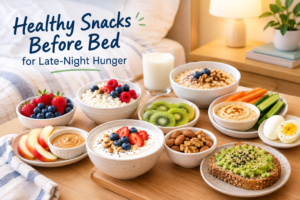
Feeling hungry before bedtime is common, especially when dinner was early or not very filling.
Eating a large meal late at night is generally not something I prefer. However, there are times when I genuinely feel hungry before going to bed. When that happens, I sometimes find it difficult to fall asleep because of the hunger.
Instead of trying to ignore it, I have found that a small snack can make me feel more comfortable. Even something simple, such as a small serving of plain yogurt or one slice of whole-grain bread, can make me feel satisfied and take away the feeling of hunger.
This does not mean that everyone needs to eat before bed. For me, the goal is simply to choose a small amount of food when I am genuinely hungry rather than eating a large or heavy meal late at night.
Why Do You Feel Hungry Late at Night?
Late-night hunger can happen for several reasons. You may have eaten dinner earlier than usual, had a lighter meal, exercised more than usual, or simply not eaten enough during the day.
Hunger is not always a sign that something is wrong. Sometimes your body may simply need a little more food.
Your Dinner May Not Have Been Filling Enough
A dinner with very little protein or fiber may not keep you satisfied for very long.
Including vegetables, whole grains, beans, eggs, fish, tofu, or another protein source can help make a meal more balanced.
If you regularly become very hungry shortly after dinner, it may be worth looking at your overall meals rather than simply trying to avoid nighttime food.
Stress and Poor Sleep Can Affect Eating Habits
Stress and insufficient sleep can affect appetite and eating habits. If you are tired or stressed at night, it can also be easier to reach for convenient snack foods.
A consistent sleep routine, regular meals, and a relaxing bedtime routine may make it easier to recognize whether you are actually hungry or simply looking for something to eat.
10 Healthy Snacks to Choose Before Bed
There is no single perfect bedtime snack. The best choice depends on your hunger, preferences, dietary needs, and how your body responds to eating late.
1. Plain Greek Yogurt
Plain Greek yogurt provides protein and can be paired with a small serving of berries or walnuts.
Choose plain, unsweetened yogurt if you want to avoid added sugar. Adding fresh fruit can provide natural sweetness without relying on a sweetened yogurt product.
If you enjoy Greek yogurt for breakfast, you may also like my [Greek Yogurt Spread for Bread].
2. A Small Handful of Walnuts
Walnuts provide unsaturated fats, plant-based omega-3 ALA, protein, and some fiber.
Because nuts are energy-dense, you do not need a large amount. A small portion can be enough for a snack.
Choose unsalted walnuts when possible, especially if you are trying to reduce sodium.
3. Apple With Nut Butter
An apple provides fiber and natural sweetness.
Pairing apple slices with a small amount of unsweetened peanut or almond butter adds fat and some protein, making the snack more substantial than fruit alone.
If you want more ideas for pairing fruit with protein and fiber, see 10 Foods to Pair With Fruit for Protein and Fiber.
Check the ingredient list when buying nut butter and look for products without unnecessary added sugars or excess sodium.
4. Cottage Cheese With Berries
Cottage cheese is a convenient protein-rich food that can be paired with fresh or frozen berries.
The combination gives you protein along with fruit, making it a simple and satisfying snack.
If you are watching sodium, compare Nutrition Facts labels because cottage cheese can vary in sodium content.
5. Kiwi
Kiwi provides vitamin C, fiber, and other nutrients.
One or two kiwis can be a simple choice when you want something naturally sweet and refreshing.
If fruit alone does not satisfy your hunger, consider pairing kiwi with plain yogurt or a small serving of nuts.
6. A Small Bowl of Oatmeal
Plain oatmeal provides carbohydrates and fiber, including beta-glucan.
A small bowl can be useful when you are genuinely hungry and want something warm and comforting before bed.
Try adding berries, chopped walnuts, or cinnamon instead of large amounts of sugar or syrup.
If you are watching your carbohydrate intake, remember that oatmeal is still a carbohydrate food, so portion size matters.
7. Carrots With Hummus
Fresh carrots provide fiber and nutrients, while hummus adds protein, fat, and flavor.
This can be a good option if you prefer a savory snack instead of something sweet.
Other vegetables such as cucumber, bell peppers, or celery can also work well with hummus.
8. A Boiled Egg
A boiled egg is a simple source of protein and can be convenient to prepare ahead of time.
It may be particularly satisfying when you are genuinely hungry rather than simply craving something sweet.
You can eat one egg on its own or pair it with a few vegetables if you want a more substantial snack.
9. Berries With Plain Yogurt
Blueberries, strawberries, and raspberries provide fiber, vitamins, and naturally occurring plant compounds.
Pairing berries with plain yogurt adds protein and can make the snack more satisfying.
Frozen berries can also be convenient when fresh fruit is not available. Just check that frozen fruit does not contain added sugar.
10. Avocado With Whole-Grain Toast
A small piece of whole-grain toast with avocado provides carbohydrates, fiber, and unsaturated fat.
Keep the portion moderate if you are eating close to bedtime.
If you are especially hungry, you can add a protein food such as a boiled egg rather than simply increasing the amount of toast.
How to Choose a Better Bedtime Snack
Rather than looking for one food that is automatically “healthy,” think about what your snack adds to your overall diet.
A useful snack may contain one or more of the following:
- Protein: Greek yogurt, cottage cheese, eggs, nuts, or hummus
- Fiber: berries, apples, kiwi, carrots, oats, or whole grains
- Healthy fats: walnuts, almonds, nut butter, or avocado
- Less added sugar: plain yogurt, whole fruit, or unsweetened foods
Combining two food groups can sometimes make a small snack more satisfying.
For example:
- Apple + peanut butter
- Greek yogurt + berries
- Carrots + hummus
- Whole-grain toast + avocado
- Kiwi + plain yogurt
If you want more ideas for combining fruit with protein and fiber, see [10 Foods to Pair With Fruit for Protein and Fiber].
What Foods Should You Limit Before Bed?
You do not have to completely avoid any particular food simply because it is nighttime. However, some foods may be less helpful if they are easy to overeat or interfere with your sleep.
Limit Added Sugar and Highly Processed Snacks
Cookies, candy, ice cream, chips, and sugary drinks can be easy to eat in large amounts.
Choosing whole or minimally processed foods more often can make it easier to maintain a nutrient-dense eating pattern.
If you want something sweet, try fresh fruit with plain yogurt instead of automatically reaching for a dessert.
Be Careful With Caffeine
Coffee, energy drinks, and caffeinated tea consumed late in the day may interfere with sleep, particularly if you are sensitive to caffeine.
If you notice that caffeine affects your sleep, consider choosing water, warm milk, or a caffeine-free beverage in the evening.
Watch Very Large or Heavy Snacks
Even nutritious foods can feel uncomfortable when eaten in large amounts right before lying down.
If you often experience fullness, indigestion, or reflux after eating at night, a smaller portion and more time between eating and bedtime may be more comfortable.
How Much Should You Eat Before Bed?
Keep Your Portion Reasonable
A bedtime snack does not need to become another full meal.
Start with a small portion and see whether it satisfies your hunger. For some people, one small serving may be enough.
My own experience is that I do not need much food to feel satisfied at night. A small serving of yogurt or one slice of bread can sometimes be enough to take away my hunger.
Your individual needs may be different.
Listen to Your Hunger Signals
If you are genuinely hungry, a small nutritious snack may be reasonable.
If you are eating mainly because of boredom, stress, or habit, try drinking some water, brushing your teeth, or taking a few minutes to relax before deciding whether you still want food.
There is no need to feel guilty about eating when you are genuinely hungry.
What If You Are Watching Your Blood Sugar?
If you have diabetes or are concerned about blood glucose, the type and amount of carbohydrate in a bedtime snack may matter.
Fruit, oatmeal, and whole-grain bread all contain carbohydrates, even though they can be nutrient-dense foods.
For example, if you choose bread at night, you could keep the portion moderate and choose whole-grain bread when it fits your eating pattern.
Pairing a carbohydrate-containing food with a protein or healthy-fat food may be more satisfying for some people, but individual blood glucose responses can differ.
If you monitor your blood glucose, your own readings can provide useful information about how different foods and portions affect you.
If you take medication that can cause low blood sugar or have been given specific instructions about eating before bed, follow your healthcare professional’s advice rather than using a general snack list.
Is Eating Before Bed Bad for You?
Eating before bed is not automatically unhealthy.
What matters is your overall eating pattern, the type and amount of food you choose, and how eating late affects you personally.
Some people may feel comfortable after a small snack, while others may experience indigestion, reflux, or disrupted sleep after eating late.
There is also a difference between eating a small snack because you are genuinely hungry and eating a large amount of highly processed food out of habit.
For me, a small snack when I am truly hungry can feel better than going to bed hungry and having trouble falling asleep.
Simple Bedtime Snack Combinations
If you want something quick, these combinations can be easy to prepare:
For something creamy:
Plain Greek yogurt + berries
For something crunchy:
Apple slices + a small amount of nut butter
For something savory:
Carrots + hummus
For something warm:
Small bowl of plain oatmeal + walnuts
For something simple:
Boiled egg + cucumber
For something light:
Kiwi + plain yogurt
For something familiar:
One slice of whole-grain bread + plain yogurt or a small amount of nut butter
The goal is not to create a complicated recipe. A small combination of simple foods can be enough.
7 Tips for Healthier Late-Night Snacking
- Start with your hunger. Eat because you are hungry, not simply because food is available.
- Keep the portion reasonable. A snack does not need to become a second dinner.
- Choose nutrient-dense foods. Fruits, vegetables, yogurt, eggs, nuts, seeds, and whole grains are useful options.
- Include protein or fiber. These nutrients can make a small snack more satisfying.
- Limit added sugar. Choose plain or unsweetened foods when possible.
- Avoid eating straight from the package. Put your snack in a small bowl or container so you can see how much you are eating.
- Pay attention to your body. Notice whether certain foods make you feel comfortable, overly full, or bothered by reflux before bed.
FAQ
1. Is it okay to eat a snack before bed?
Yes. A small snack can be reasonable if you are genuinely hungry. Choose a simple food and keep the portion appropriate for your needs.
2. What is a healthy snack when you are hungry at night?
Plain Greek yogurt with berries, a small handful of walnuts, apple with nut butter, cottage cheese with berries, kiwi, oatmeal, vegetables with hummus, or a boiled egg are examples.
3. How much should I eat before bed?
There is no universal portion that works for everyone. Start with a small serving and consider your overall diet, hunger level, activity, and individual needs.
4. Are fruit and yogurt good bedtime snacks?
They can be. Fruit provides carbohydrates, fiber, vitamins, and other nutrients, while plain yogurt can provide protein. Choose portions that fit your overall eating pattern.
5. Should I avoid sugary snacks before bed?
You do not necessarily need to completely avoid them, but limiting foods high in added sugar can help support a nutrient-dense eating pattern. Whole fruit or plain yogurt with fruit can be alternatives to many sugary desserts.
6. Can eating before bed cause heartburn?
Eating late may worsen symptoms for some people with reflux or heartburn. If you regularly experience nighttime symptoms, talk with your healthcare professional about your eating schedule and symptoms.
7. What should I avoid eating late at night?
There is no universal list of foods that everyone must avoid. However, very large meals, foods high in added sugar, highly processed snacks, or caffeine may be less suitable for some people before bed.
8. What is a good bedtime snack if I am watching my blood sugar?
Consider a moderate portion and pay attention to the carbohydrate content. Options such as plain Greek yogurt with berries, an egg with vegetables, or a small amount of whole-grain toast with avocado may fit into a balanced eating pattern. Individual needs vary, especially if you take glucose-lowering medication.
9. Can I eat nuts before bed?
Yes. Nuts can be a convenient snack because they provide unsaturated fats, protein, and some fiber. Because they are calorie-dense, a small portion is usually enough.
10. Is oatmeal a good snack before bed?
Plain oatmeal can be an option if you want something warm and filling. It contains carbohydrates and fiber, so consider the portion and what you add to it.
Final Thoughts
Eating late at night is not something I try to make a habit, but sometimes genuine hunger happens.
When I am hungry before bed, especially after an early dinner, I may have a small snack rather than trying to fall asleep while feeling hungry. In my experience, even a small serving of yogurt or one slice of bread can be enough to feel satisfied and more comfortable.
The goal is not to find one perfect bedtime snack.
Instead, choose a small portion of a nutritious food, consider adding protein, fiber, or healthy fats, and pay attention to how your body feels afterward.
If you regularly feel very hungry at night, look beyond the snack itself. Your dinner, daytime meals, activity level, sleep, and overall eating pattern may all be worth considering.
Important: This article is for general informational purposes only and is not medical advice. If you have diabetes, take medication that affects blood sugar, have frequent nighttime heartburn, or have a medical condition requiring a specific diet, talk with your healthcare professional about eating habits that are appropriate for you.
Sources
- Centers for Disease Control and Prevention (CDC): Healthy Eating Tips
- Centers for Disease Control and Prevention (CDC): Healthy Meals and Snacks
- American Heart Association: Healthy Snacking